Pogona vitticeps
Bearded dragon
One of the calmest and most popular lizards for beginners. Suitable for all ages, tames easily and requires no CITES paperwork.
For beginnersUpdated:
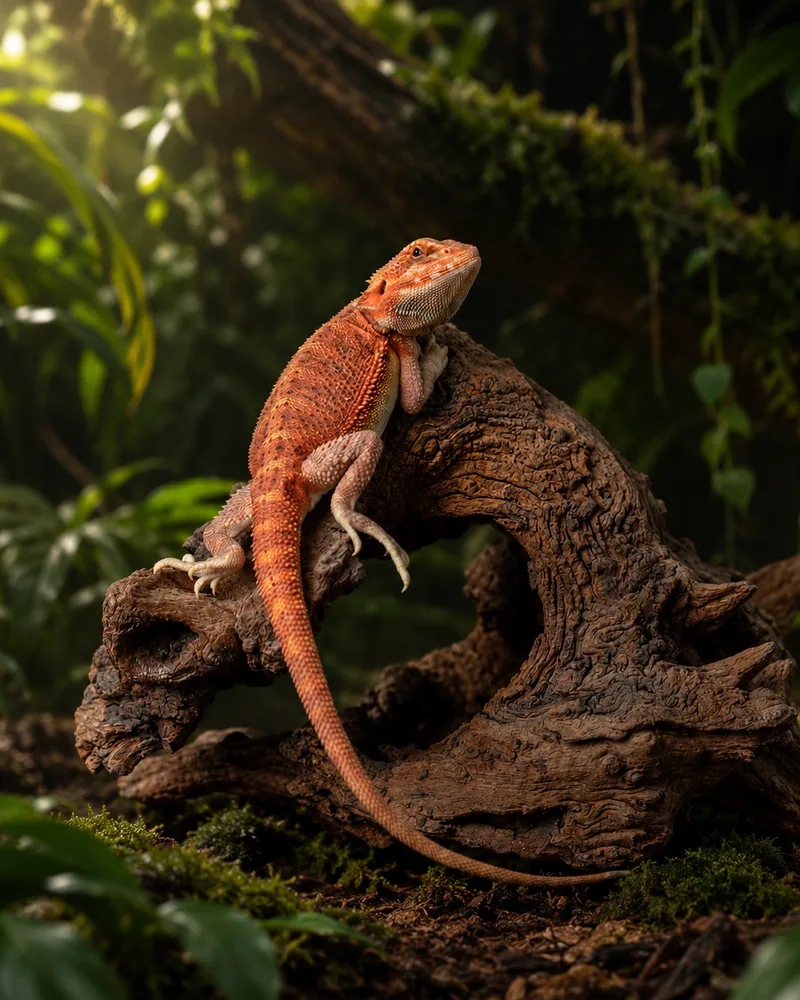
The bearded dragon is one of the most popular lizard species in the world and one of the calmest lizards to keep. They are often kept here, and there are several breeders who breed them regularly. It comes from a large part of Australia - from dry, semi-desert and desert regions. They usually grow to 45-55 cm, with females smaller than males and with a narrower head. Prices start at 6,000 din for standard animals and go up to several tens of thousands of dinars for uniquely colored morphs. It is not on the CITES list - no paperwork is needed.
Price
Babies from 6,000 din
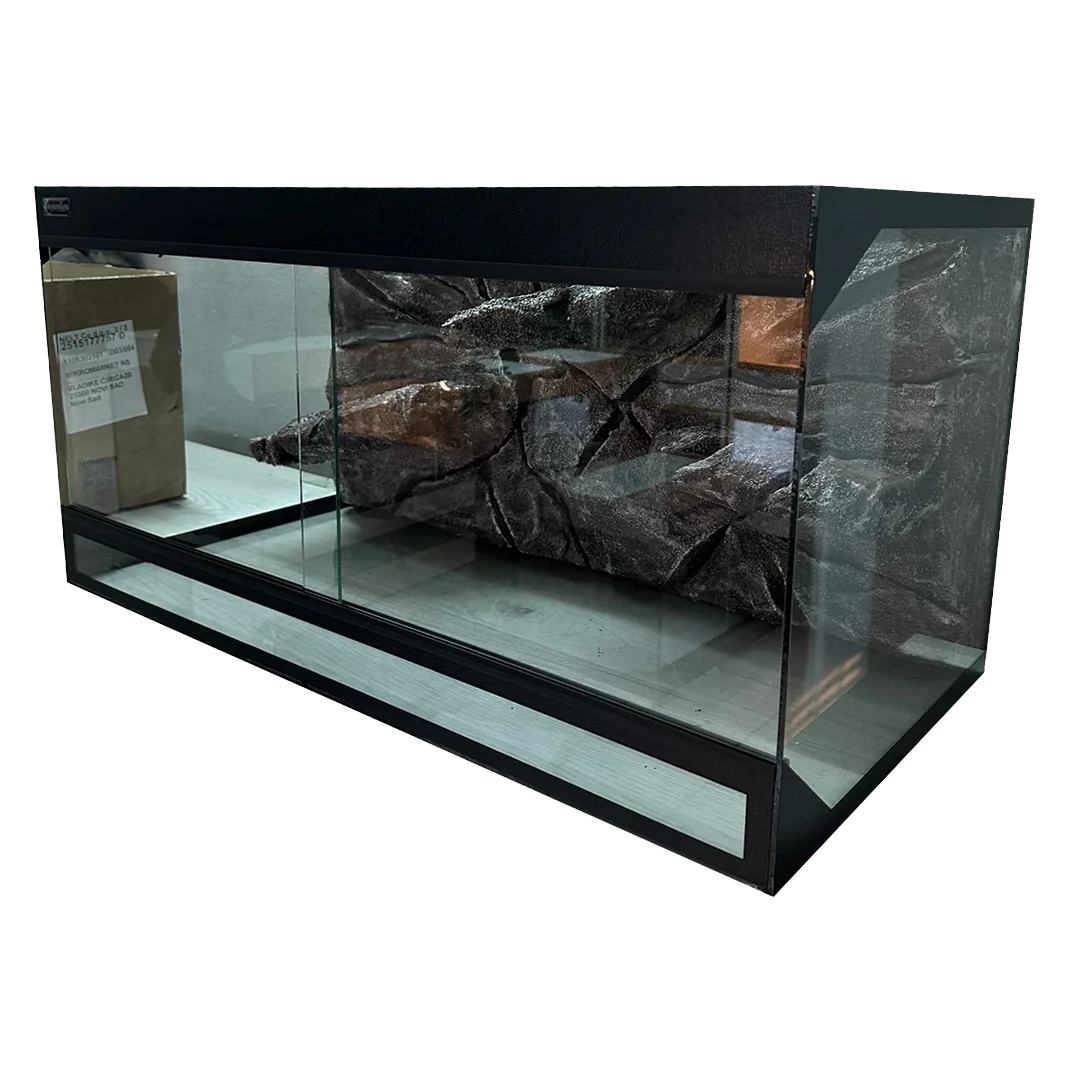
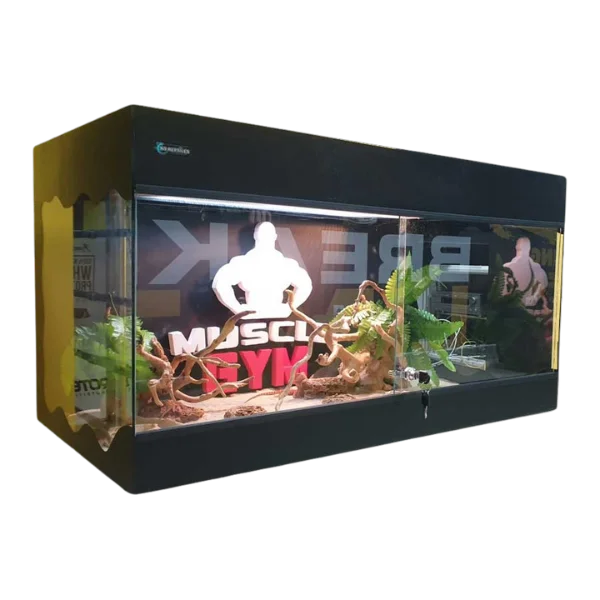
Captive-bred bearded dragons from a local breeder - the animals are healthy, tame and ready for a new home. Starter kit (bearded dragon + 100x45x45 terrarium with a 3D background, UVB/UVA lighting, sand, vitamins and food for one month): from €220 (25,800 din). The kit also comes with free care advice - we are available after the purchase too.
Appearance and behavior
Appearance
They got their name from the beard, which can turn black and puff up when they are angry or feel threatened. The same happens when a male courts a female. They have spikes around the head and along the sides of the body - the spikes are hard, but because they sit on the skin they move under pressure and cannot prick. They do not drop their tails and do not regrow them if they fall off. There are a great many different morphs - the standard color is gray with lighter and darker markings, and there are also yellow, orange and red animals, which cost more because of many years of planned breeding.
Behavior
One of the calmest lizards, it becomes so tame over time that it can rest in your hands without any problem. It is active only during the day - as soon as the lights go off, it goes to sleep. When they hatch they are skittish, because they are tiny and everything is new to them. Once they calm down and grow a little, they should slowly be accustomed to being taken out and to human contact. Over time they will become very calm and tame. They will regularly eat from your hand.
Terrarium and substrate
Terrarium
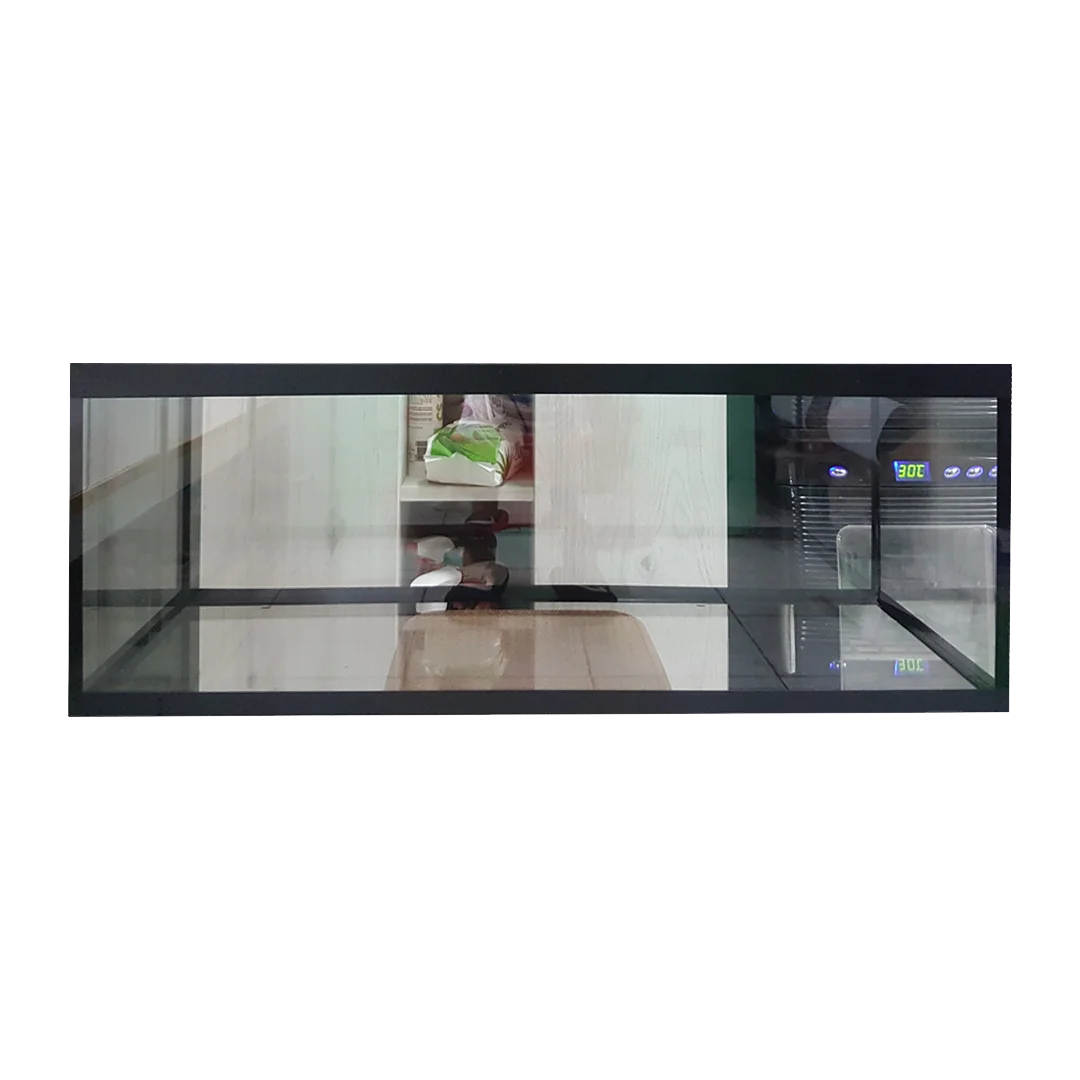
The minimum terrarium size for one adult is 100 × 50 × 50 cm. Smaller animals can be kept in smaller terrariums until they outgrow them. For babies I recommend a terrarium measuring 50x40x30cm. If they are already strong and are a month and a half old or more, they can go straight into their final terrarium.
It is advisable to provide a hiding place for young animals in the form of a stone cave, a stump or a larger rock. Always make sure these items cannot fall and crush the animal. Once they are bigger, they usually do not need a classic hide and will sleep wherever they like - they often dig into the sand and fall asleep there.
Substrate
Several types of substrate can be used: newspaper, paper, foam mat, linoleum, flat stones or fine sand. Sand, together with flat stones, is the most natural substrate, but keep hygiene and maintenance in mind. For 1-2 lizards you can set up a natural environment, while for a larger number linoleum is more practical for easier cleaning. I put my own babies on sand from birth and they never have any problems.
Paper substrate is used in quarantine - for temporary housing when you need to clean often and monitor how much food the animals eat and what their stool looks like.
Temperature and conditions
Temperature
You need to create a temperature gradient by heating only one part of the terrarium with a spot lamp. The temperature on the warm side, under the lamp, should be around 40-45°C, while the cooler side can be 25-30°C or lower. A spot lamp has a concentrated beam of light and heats directly underneath - this is where the dragon will come to warm up after feeding or when the lights come on.
The lamp should not be placed too close to the substrate so the dragon does not get burned. Always put a stone under the lamp; it will heat up and hold the temperature even after the lamp is switched off. At night the lamp is turned off and the temperature can drop to room temperature, about 20°C.
In winter the heating can be switched off and they can be left at lower temperatures to rest, especially if breeding is planned for the next season. The temperature can then drop to 14-16°C without any problem. During this period they do not eat because their metabolism slows down - offer a few pieces of easily digestible food every 4-5 days.
Lighting and UVB
Since this is a diurnal species, a UV tube is essential - a fluorescent tube emitting UVA and UVB. Tubes with 10% or 12% UVB are usually used, and they are replaced once a year because their output declines. Alongside the UV tube, a spot lamp for heating is always used. At night all lighting must be switched off so the lizard can sleep in peace.
Humidity and water
Since they come from dry regions, they do not need high humidity. They get all the moisture they need from a weekly bath in warm water - pour a few centimeters of water into a basin and let the dragon sit in it for about 5 minutes, during which it will drink. During shedding, bathing helps remove the old skin.
They do not need a water bowl available at all times. Some animals learn to drink standing water and some never do - they drink only when the water moves, or get it from the fruit and vegetables in their diet.
Diet
The bearded dragon is an omnivore - it eats both plant and animal food. Insects include mealworms, superworms, lateralis roaches, dubia roaches and crickets, and adults occasionally get young mice. Insects are the primary food, especially for younger animals.
They also eat plant food: carrot, zucchini, various types of lettuce, pumpkin, apple, dandelion and hibiscus. Young dragons often refuse plant food for the first few months, and some animals prefer certain kinds and never eat others. Avoid sour fruit, cabbage and vegetables that are hard to digest.
While young, they are fed roughly 2 times a day - the first time once they have warmed up after the lights come on, the second time a couple of hours before the lights go off. The insects should be roughly 1cm, or no larger than the distance between the dragon's eyes. As they grow, they usually eat once a day, and even less often in winter.
Breeding
The sex cannot be determined with certainty until about 5-6 months of age. It is checked by lifting the tail at a 90° angle - one bump behind the cloaca means a female, two mean a male.
A cooling period (about 2-3 months, usually December-February) is necessary for breeding. I would warmly recommend it, because it means a lot to the animals themselves during reproduction. I stop feeding sometime in December. I leave them at standard temperatures during the day, with the lamps on, but I fit weaker bulbs. During this time the lighting intensity is reduced and the day is shortened from 14 to 10 hours. In February the stronger conditions are restored, and within a week the lizards regain their appetite and become active.
After mating, the female lays eggs within 2-4 weeks, usually around 25 of them. Incubation takes about 70 days at a temperature of 29-29.5°C. I recommend keeping all babies separately if possible, to make it easier to keep track of feeding and defecation, and also to reduce stress and nipping.
Health
The bearded dragon is one of the hardier lizards - they tolerate changes in temperature and humidity. Still, reptiles are generally hard to treat, and there is a shortage of vets with the right experience here. By the time symptoms appear, the illness has usually already progressed. If you cannot get help from your local vet, or the vet does not know what to do and how to help you, feel free to contact me and I will try to refer you to some of the vets I work with.
Prevention is the most important thing: study the husbandry requirements thoroughly before getting one. An animal from a trusted breeder usually has no internal parasites. Parasites are most often found in animals caught in the wild. They can only be detected by a lab test of the feces - this is advisable whenever the origin is uncertain. The first symptoms of infection are lethargy, refusing food, bloody stool or vomiting.
Bearded dragon FAQ
Bearded dragon prices range from 6,000 din for standard animals up to several tens of thousands of dinars for uniquely colored morphs such as red, yellow or orange. A starter kit with a terrarium and equipment costs from €220 (25,800 din).
The €220 (25,800 din) starter kit includes: a bearded dragon, a 100x45x45 terrarium with a 3D background, UVB/UVA lighting, sand, vitamins and food for one month. Everything you need for a safe start in one place.
Yes, the bearded dragon is one of the best lizards for beginners. They are calm, tame easily and are forgiving of mistakes in care. No CITES paperwork is required.
In captivity, a bearded dragon lives 10-15 years on average with proper care, diet and terrarium maintenance.
The temperature under the spot lamp should be 40-45°C, while the cooler side of the terrarium can be 25-30°C. At night the temperature can drop to room temperature (about 20°C).
The bearded dragon is an omnivore - it eats insects (crickets, dubia roaches, mealworms) and plant food (carrot, zucchini, lettuce, apple). Young dragons eat 2 times a day, adults once.
It is safest to keep one animal per terrarium. Two males should never be kept together because they are territorial and will fight. A male and a female are put together only during the breeding season.
Yes, pickup is in person in Novi Sad, and we arrange shipping to other places by agreement. Contact us by phone or WhatsApp and we will work out the details.
Recommended products
Contact NS Reptiles
For questions about getting a bearded dragon, its care or equipment - we are here. Give us a call or send a message.