Eumeces schneiderii
Schneider's skink
A calm skink from the dry regions of North Africa and the Middle East, recognizable by the orange spots on its back. It loves to burrow in sandy substrate and with good care can live up to 20 years.
For beginnersUpdated:
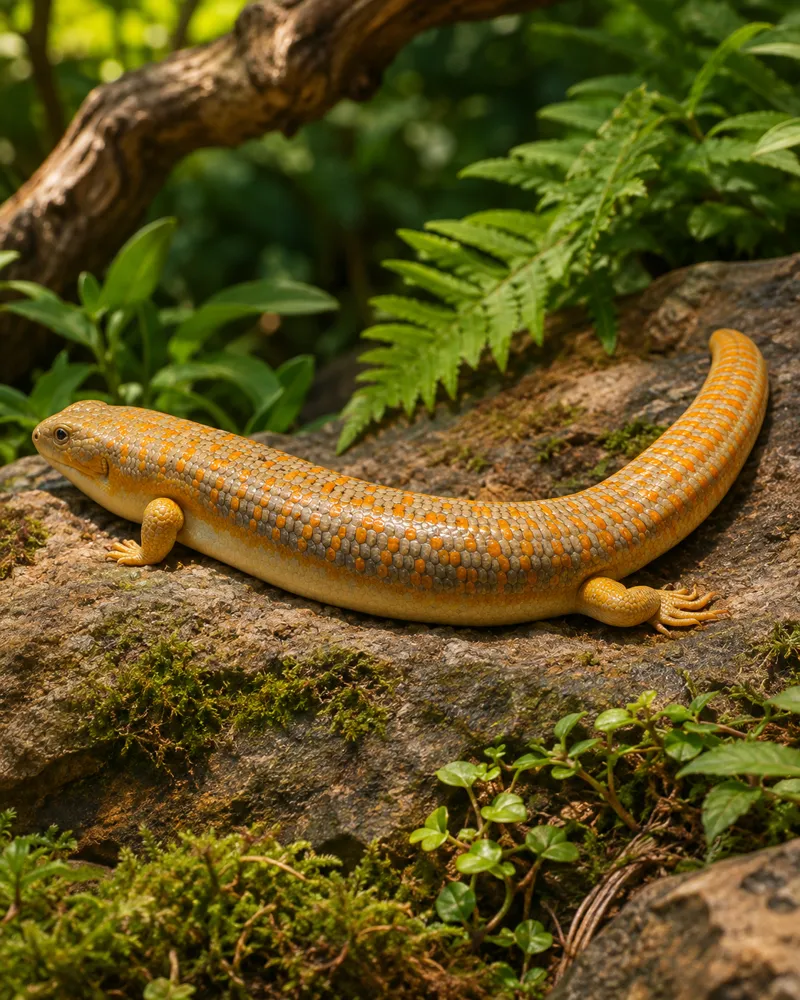
Schneider's skink (Eumeces schneiderii), also known as the Berber skink, is a medium-sized lizard with smooth, glossy scales and orange spots. It is active during the day, spends most of its time burrowing and exploring the substrate, and is generally calm with people. Its care is straightforward, so it is a good choice for beginners too, as long as they can provide a warm, dry setup with UVB lighting.
Origin, appearance and behavior
Origin and habitat
Schneider's skink lives in the dry, warm regions of North Africa and the Middle East, and its range extends as far as Central Asia. It inhabits semi-deserts, rocky slopes and steppe with sparse vegetation, where it hides in burrows and loose soil.
Size and appearance
Adults usually reach about 35-40 cm in total length, a large part of which is tail. The body is long and cylindrical, with short legs and smooth, glossy scales. The base color ranges from sandy to olive-brown, sprinkled with orange spots, and many individuals have a lighter, yellowish stripe along the flanks.
Behavior and handling
It is active during the day: it basks in the morning and then digs, explores and hunts. Young animals are often shy, but adults usually get used to people and short handling sessions with patience. Like other lizards, it can drop its tail if grabbed by it, so always lift it by supporting the whole body.
Terrarium and substrate
Terrarium
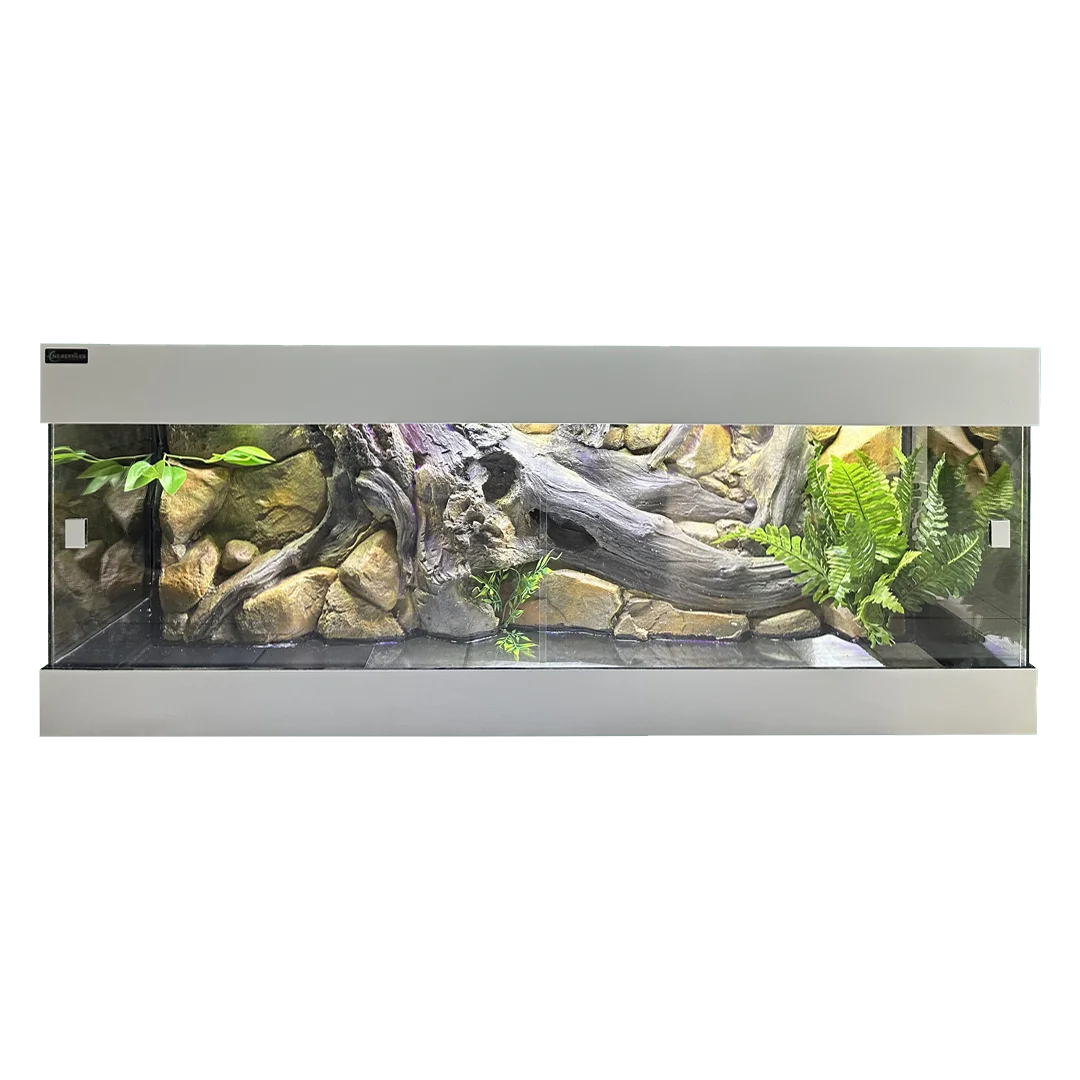
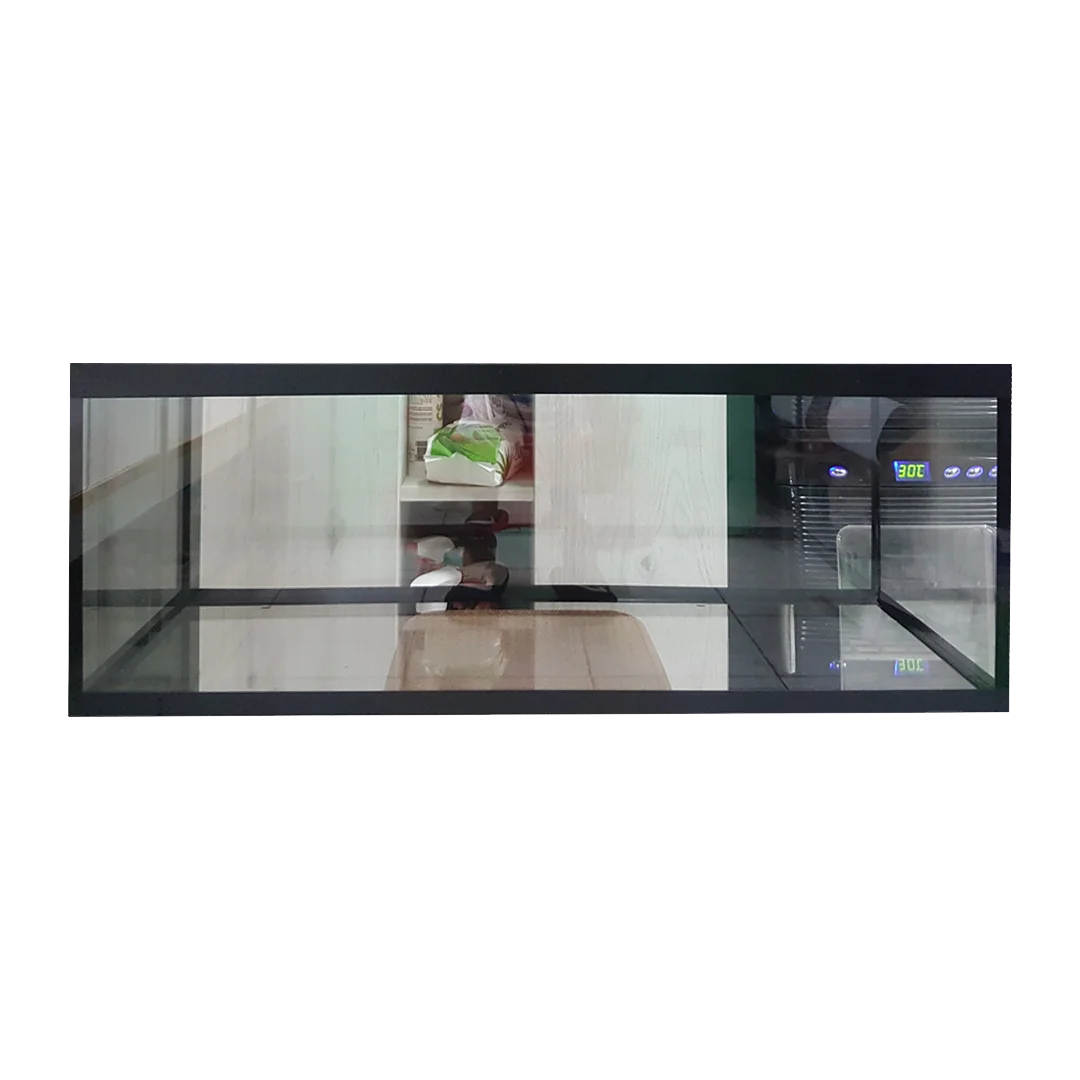
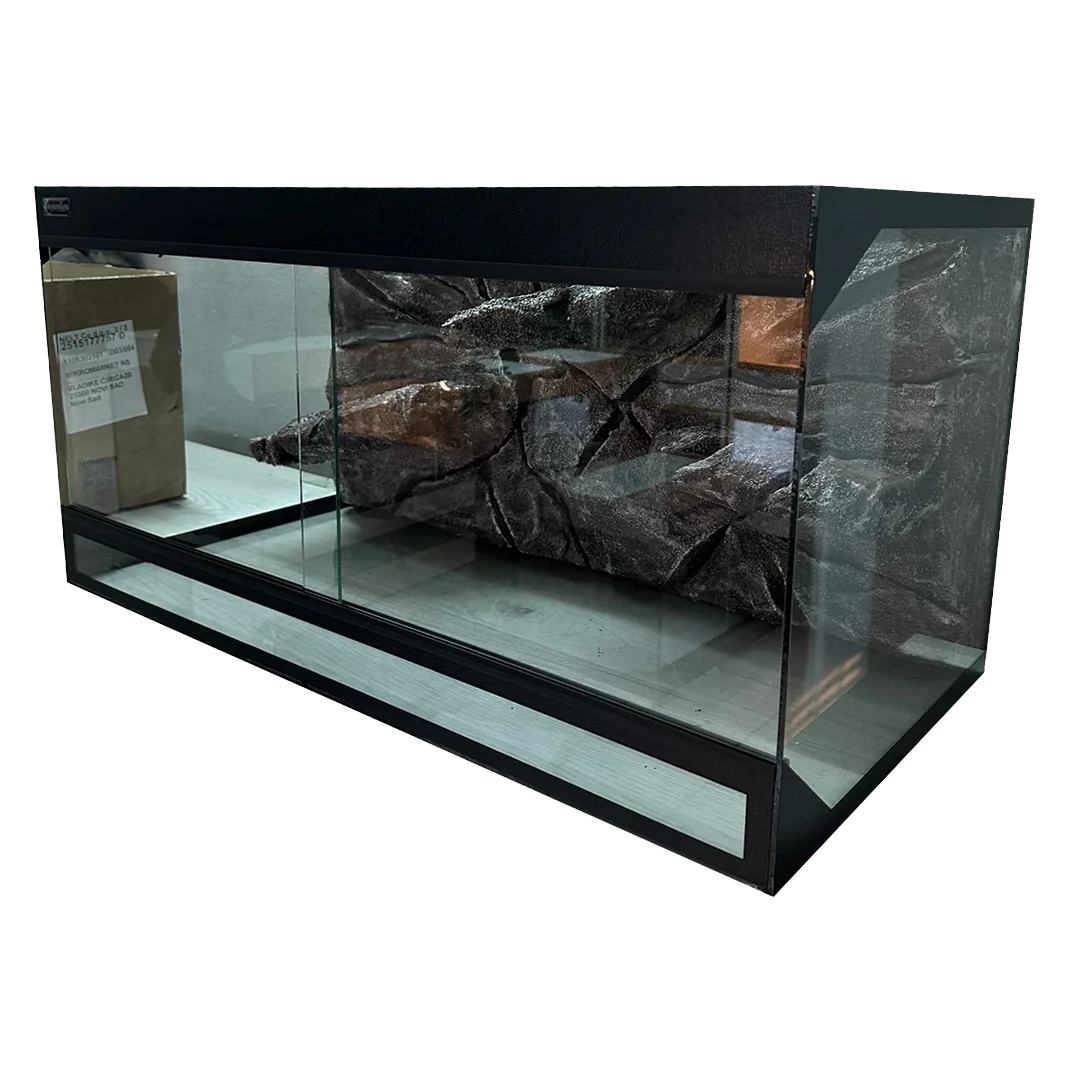
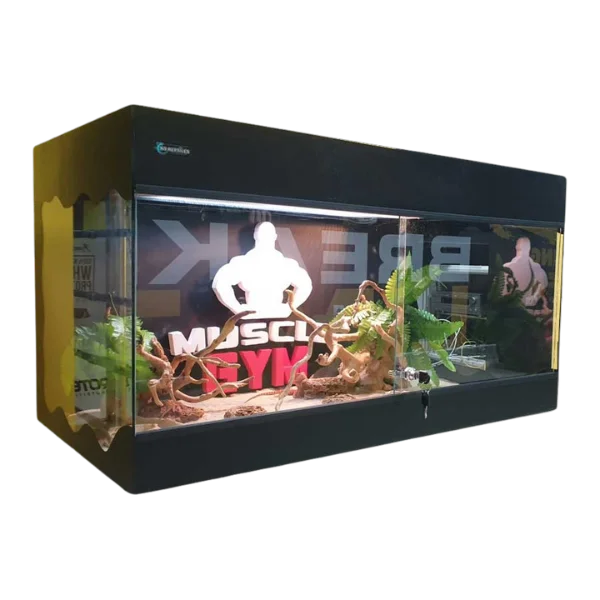
It needs a horizontal terrarium - for one adult, a footprint of at least about 90×45 cm, preferably 100-120 cm long. Since this skink digs more than it climbs, a height of 45-50 cm is enough and leaves room for a deep layer of substrate. Add stable rocks and bark for the basking spot, hides on the warm and cool sides and a shallow water dish. Rocks should rest on the terrarium floor, not on the substrate, so the skink cannot dig under them and bring them down on itself.
Substrate
The substrate is the most important part of the setup for this species. A mix of sand and soil (or clay) that holds tunnels works best, at least 10-15 cm deep. The surface should be dry, while the bottom layer in one corner can be slightly moist. Avoid pure fine sand, calcium sand and sharp substrates.
Temperature and conditions
Temperature
The basking spot should be 35-40 °C, the warm side around 30-32 °C and the cool side 24-27 °C. At night the temperature can drop to 18-22 °C, so night heating is usually not needed. Control the heating with a thermostat and check temperatures with a thermometer in several spots.
Lighting
As a diurnal species from sunny regions, Schneider's skink needs a heat lamp over the basking spot and UVB lighting (a T5 tube, with strength chosen according to its distance from the basking spot) running 12-14 hours a day. UVB is important for vitamin D3 production and bone health.
Humidity and water
This species likes dry air - humidity of about 30-50% is right. A slightly moist layer of substrate or a humid hide helps with shedding. A shallow dish of fresh water should always be available.
Diet
Staple diet
Schneider's skink feeds mainly on insects: crickets, dubia roaches, locusts, black soldier fly larvae and mealworms. Variety is important for its health, so rotate insects and gut-load them well before feeding.
Extras
Some individuals occasionally take a bit of sweet fruit or soft vegetables, but this is not the basis of the diet. Superworms and waxworms are fatty and are given only as treats.
Feeding frequency
Young skinks are fed every day or every other day. Adults are fed 2-3 times a week, as much as they eat in a short time. This species easily becomes overweight, so keep an eye on the animal's body condition.
Supplements
Insects are regularly dusted with calcium powder, and a reptile multivitamin is added once a week. Together with UVB lighting, this prevents metabolic bone disease.
Health and breeding
Lifespan
With proper care, Schneider's skink lives 15-20 years in captivity. It is a hardy species and rarely gets sick when temperature, lighting and diet are right.
Possible health problems
The most common problems are obesity, metabolic bone disease from a lack of UVB or calcium, retained shed and respiratory infections in a terrarium that is too damp or too cold. If you notice loss of appetite, lethargy or labored breathing, see a vet who specializes in exotic animals.
Breeding and housing together
Schneider's skink lays eggs. Males are territorial, so two males are never kept together, and the safest option is for each animal to have its own terrarium. For breeding, the male and female are introduced under supervision, usually after a winter cool-down period.
Frequently asked questions about Schneider's skink
Yes. It is calm, hardy and not a picky eater. It needs a spacious terrarium with deep substrate, a basking spot and UVB lighting.
Adults usually reach about 35-40 cm in total length, including the tail.
With proper care it lives 15-20 years in captivity.
Mainly insects - crickets, dubia roaches, locusts and larvae. Insects are dusted with calcium, and adults are fed 2-3 times a week.
It is completely natural behavior - it hides, rests and regulates its temperature in the substrate. That is why it needs a sandy substrate layer at least 10-15 cm deep.
Recommended products
Get a Schneider's skink
Contact us by phone or WhatsApp to check availability, get terrarium and equipment recommendations and care advice. We will be happy to help.