Lepidodactylus lugubris
Mourning gecko
A tiny nocturnal gecko from the islands of Southeast Asia and the Pacific, only 8-10 cm long. Almost all individuals are females that lay eggs without males, so a small colony forms easily in a planted terrarium.
For beginnersUpdated:
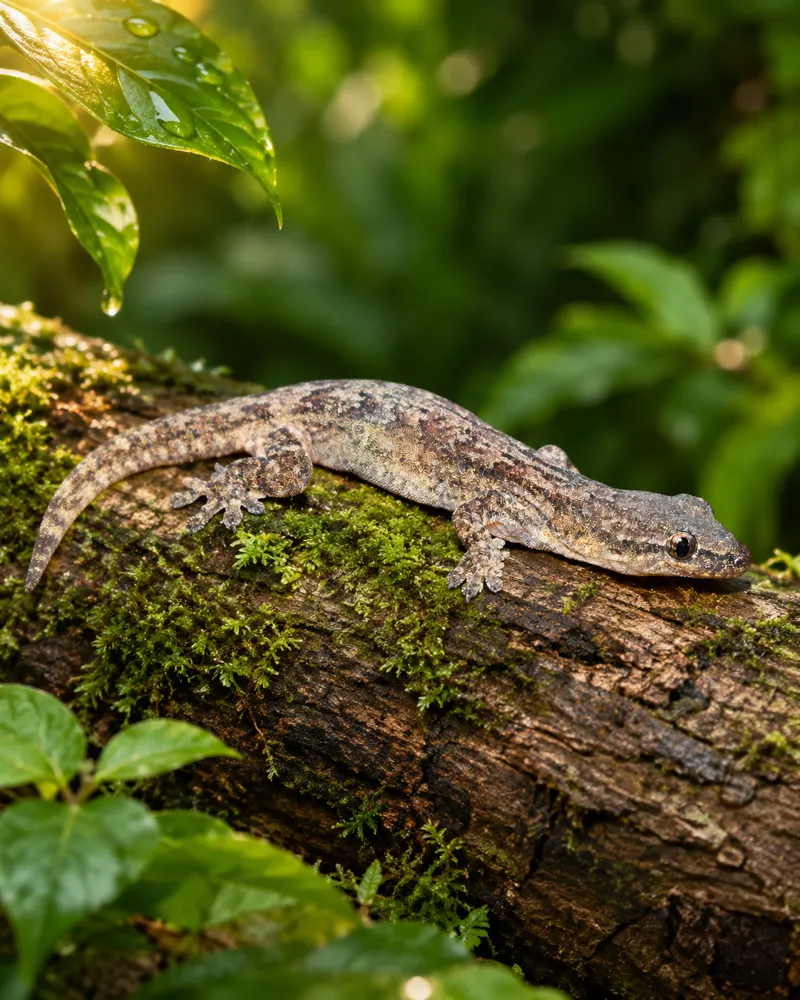
The mourning gecko (Lepidodactylus lugubris) is one of the smallest geckos in the hobby. What makes it special is parthenogenesis - females lay eggs without mating, and new females hatch from them. It is kept in groups, looks its best in a densely planted terrarium and eats small insects and fruit-based gecko diet. It is more of an animal to watch than one to hold.
Origin, appearance and behavior
Origin and habitat
Its natural range covers the islands and coasts of Southeast Asia and the Pacific, and it has spread to many other tropical regions. It lives on trees, palms and shrubs, and often on house walls near lights, where it hunts insects.
Size and appearance
Adults are 8-10 cm long including the tail. Color is beige to brown, with dark V-shaped or zigzag markings along the back and a dark stripe from the eye towards the neck. The shade changes - the gecko is usually darker by day and when stressed, and paler at night. Its toes have adhesive pads, so it climbs glass with ease.
Behavior
It is active at dusk and at night. It is small, fast and quick to escape, so it is not a gecko for handling - it can drop its tail, and although a new one grows, it does not look like the original. Individuals communicate with quiet chirping sounds. In a group it is mostly peaceful, though small squabbles over food and spots do happen.
Who it suits
It suits beginners who want to watch a lively little colony in a nicely planted terrarium. If you are looking for a gecko to handle, a crested or gargoyle gecko is a better choice.
Terrarium and substrate
Terrarium
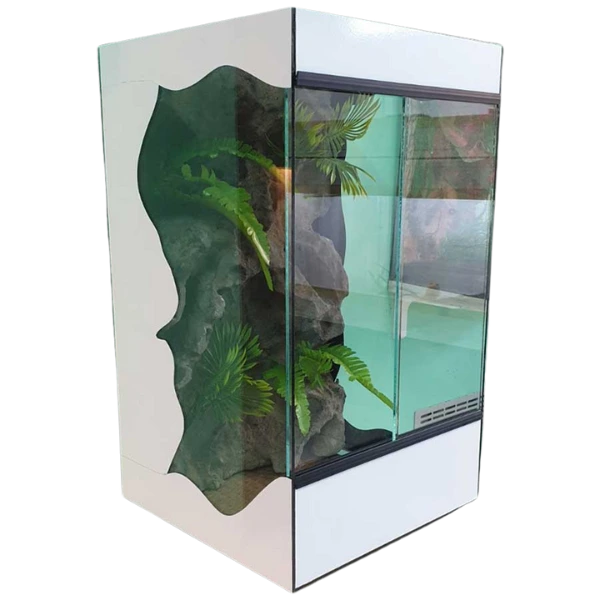
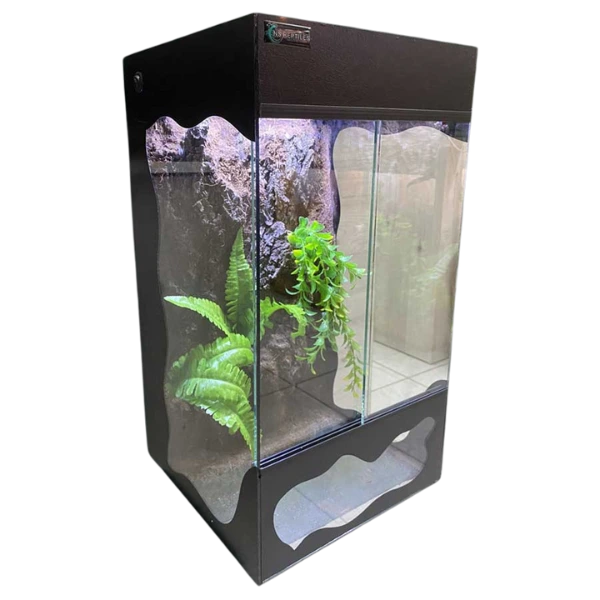
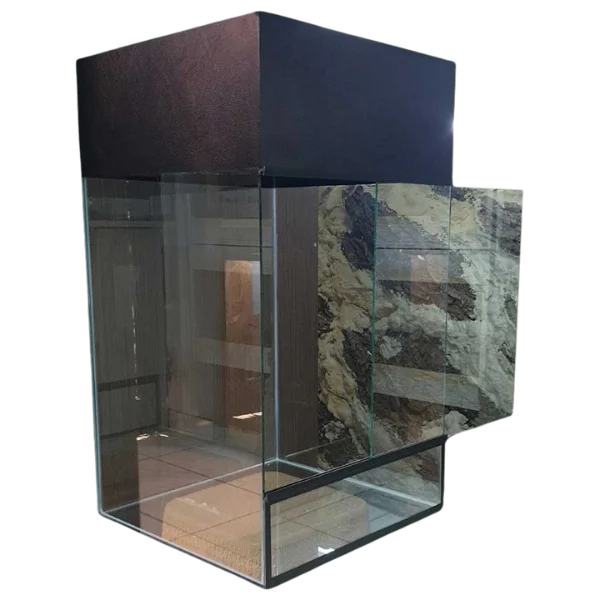
A vertical terrarium works best. For a small group of 2-4 geckos, about 30×30×45 cm is enough; a larger colony needs more space. The terrarium must close tightly - hatchlings are tiny and squeeze through any gap, including wider cable openings. Add cork bark, thin branches, bamboo and plenty of plants.
Plants and substrate
A bioactive setup suits them best: a drainage layer, a substrate of soil, coco fiber and leaf litter, live plants (e.g. pothos, bromeliads, creeping fig) and a cleanup crew such as springtails and isopods to break down leftover food. Broad-leaved plants give the geckos places to hide, drink and lay eggs.
Temperature and conditions
Temperature
22-28 °C during the day, with a warmer spot of up to about 29 °C near the top of the terrarium. A slight drop to 20-22 °C at night is good. If your home is cooler, use a low-output heat source on a thermostat and make sure the terrarium does not overheat.
Lighting
Plants need an LED grow light for about 10-12 hours a day. Low-level UVB can benefit the geckos as long as there is enough shade and cover. At night the terrarium should be dark.
Humidity and water
Keep humidity at around 60-80%, misting once or twice a day. The geckos drink droplets from leaves and glass. Surfaces should partly dry between mistings, and ventilation must prevent mold and stale air.
Diet
Fruit-based diet
A complete fruit-based gecko diet (such as Repashy or Pangea) is the staple. Offer it in a small dish placed up high several times a week and replace it after 24-48 hours. Since the whole group eats from the same dish, make sure every gecko gets access to food.
Insects
Besides the diet they also eat small insects: fruit flies, small crickets and young roaches. An insect should be smaller than the gecko's head. Offer insects 1-2 times a week, dusted with calcium.
Supplements
Females lay eggs constantly and use up a lot of calcium. In addition to dusting insects, you can keep a shallow dish of calcium powder in the terrarium. If you don't use UVB, choose calcium with vitamin D3, and add a multivitamin about once a week.
Health and breeding
Lifespan and health
Lifespan figures vary; in captivity mourning geckos most often live 5-10 years. The biggest risks are calcium deficiency in egg-laying females, dehydration and stuck shed in a terrarium that is too dry. If you notice weight loss, lethargy or deformities, see a vet who specializes in exotic animals.
Parthenogenesis
The mourning gecko reproduces without males: females lay eggs that hatch into genetic copies of the mother, which are also female. Males are extremely rare and usually sterile. That is why a single female can start a whole colony.
Eggs and hatchlings
The female lays 2 eggs at a time and glues them to glass, bark, bamboo or leaf axils, usually in a hidden spot. The eggs can be left in the terrarium, as glued eggs cannot be moved without damage. Hatchlings emerge after roughly two to three months, depending on temperature, and immediately eat small insects and the fruit diet.
Colony
A group of females in a large enough terrarium lives in harmony, but numbers grow quickly. Keep an eye on density: when it gets crowded, move some of the young to another terrarium or rehome them. Do not mix them with other gecko species.
Mourning gecko FAQ
No. The mourning gecko reproduces by parthenogenesis - females lay eggs without males, and new females hatch from them.
A terrarium of about 30×30×45 cm is enough for 2-4 geckos. The colony grows on its own, so surplus young will need to be moved over time.
An adult mourning gecko is 8-10 cm long including the tail.
A complete fruit-based gecko diet and small insects such as fruit flies and small crickets, dusted with calcium.
It is not recommended. It is tiny and fast, escapes easily and can drop its tail. It is a species to watch in a planted terrarium.
Recommended products
Get mourning geckos
Contact us by phone or WhatsApp to check availability, get planted terrarium and equipment recommendations and care advice. We will be happy to help.