Lampropeltis triangulum
Milk snake
A non-venomous snake with striking red, black and white bands - hardy and easy to keep. Its size depends on the subspecies, and it must always be housed alone.
For beginnersUpdated:
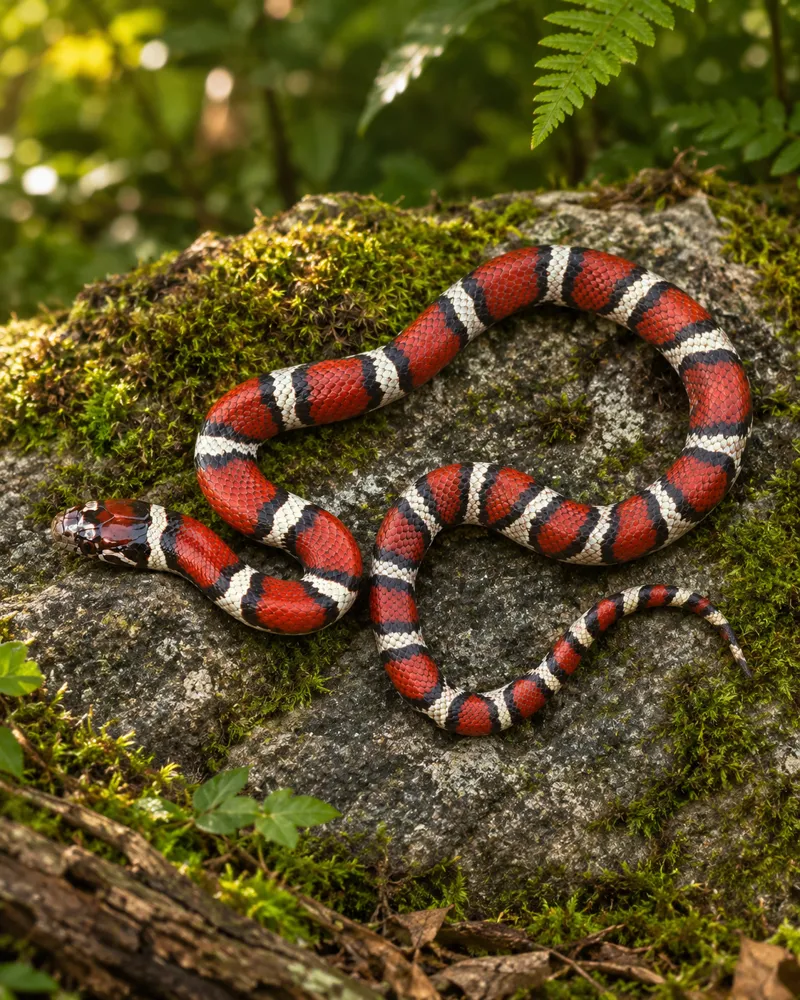
The milk snake is a non-venomous snake from North and Central America, known for its red, black and white (sometimes yellow) bands that mimic the venomous coral snake. This mimicry scares off predators, even though the milk snake is completely harmless to people. Several subspecies are kept in the hobby under the name Lampropeltis triangulum, and they differ a lot in size - from small ones that barely exceed half a meter to the Honduran milk snake, one of the largest. With proper care it lives 15-20 years in captivity.
Origin and appearance
Origin and habitat
Its range stretches from southeastern Canada through much of the USA and Mexico to Central America. It lives in very different habitats: deciduous forests, rocky hillsides, meadows and farmland, and in the tropics also humid lowland forests. Such a large range has produced many subspecies, some of which are now treated as separate species under newer taxonomy.
Size and appearance
Depending on the subspecies, adults reach 60-120 cm. The most common in the hobby are the Pueblan (L. t. campbelli), Sinaloan (L. t. sinaloae), Nelson's (L. t. nelsoni) and Honduran milk snake (L. t. hondurensis), which is one of the largest. The body is slender, with smooth, glossy scales. Besides the natural pattern, selective breeding has produced varieties such as albino and tangerine milk snakes.
Behavior and handling
Behavior
Milk snakes are mostly active at dusk and at night and spend much of the day in a hide or buried in the substrate. Babies are often nervous and quick - when frightened they thrash, release an unpleasant musk or try to bite. With short, regular handling most of them calm down and become easy to hold. They have a strong feeding response, so wash your hands after touching rodents, and do not handle the snake for 48 hours after a meal.
Housed alone only
A milk snake must live on its own. In the wild it also eats other snakes, so cannibalism in a shared terrarium is a real danger - and not only when the snakes differ in size. Snakes are put together only briefly and under supervision, for breeding.
Terrarium and substrate
Terrarium
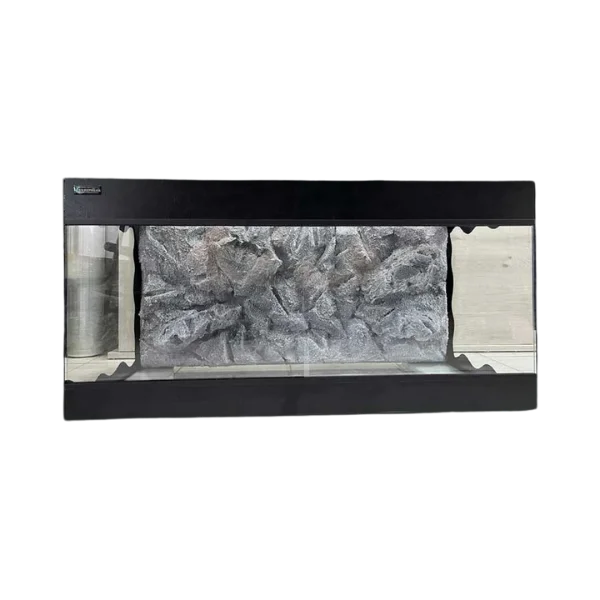
An adult of a medium-sized subspecies does well in a terrarium of about 90×45×45 cm; smaller subspecies can live in a slightly smaller one, while a Honduran milk snake is better off in a terrarium 100-120 cm long. Babies feel safer in a smaller space with plenty of cover. Provide at least two hides (on the warm and the cool side), branches for climbing and a water bowl. The lid must fit tightly and lock - milk snakes are skilled escape artists.
Substrate
Aspen shavings, coco fiber or a soil and coco mix, deep enough for the snake to burrow. Avoid cedar and pine, whose aromatic oils irritate the airways, and fine particles that can cause impaction. Remove soiled substrate right away and replace all of it from time to time.
Temperature and conditions
Temperature
Warm side: 28-31 °C. Cool side: 22-25 °C. At night the temperature should not drop below 20 °C. Place a heat mat or heat cable on a thermostat under one third of the terrarium so the snake can choose where it is comfortable.
Lighting
UVB is not necessary, but a regular day and night cycle with 10-12 hours of light (on a timer) supports a normal feeding and activity rhythm.
Humidity
Optimal: 40-60 %. Before shedding, provide a humid hide with damp moss or coco fiber.
Water
Fresh water always available in a sturdy bowl. Clean the bowl regularly, as snakes often bathe in it.
Diet and health
Diet
Babies: pinkies (newborn mice) every 5-7 days. Adults: appropriately sized mice every 7-14 days, larger individuals also young rats. Prey should not be wider than the thickest part of the snake's body. Frozen-thawed food is recommended. Some babies are reluctant to take rodents at first; if a snake refuses food for a long time, ask us or a vet for advice.
Health
Common problems are respiratory infections (from cold or humidity without ventilation), stuck shed, mites and obesity from overfeeding. If you notice signs of illness - labored breathing, mucus around the mouth, long refusal of food - consult a vet who specializes in exotic animals.
Breeding
Sexual maturity is reached at 2-3 years. Before the breeding season the snakes are brumated for 2-3 months at a lower temperature (about 12-16 °C), and feeding stops a few weeks before cooling so the gut is empty. Females usually lay 5-15 eggs, and incubation takes about 55-65 days at 27-29 °C. Hatchlings are housed separately right after hatching.
Milk snake FAQ
No. The milk snake is not venomous and kills its prey by constriction. Its red, black and white pattern only mimics the venomous coral snake.
From an old folk tale that these snakes drink milk from cows in barns. That is not true - what draws them to barns are mice.
It depends on the subspecies: adults reach 60-120 cm, and the Honduran milk snake is one of the largest.
With proper care it lives 15-20 years in captivity.
No. Milk snakes eat other snakes, so they are always housed alone. They are put together only briefly, under supervision, for breeding.
Yes. Its requirements are simple and it is a hardy snake. Keep in mind that babies are often nervous and need some time to get used to handling.
Recommended products


Contact NS Reptiles
For questions about getting a milk snake, its care or equipment - we are here. Give us a call or send a message.