Archispirostreptus gigas
Giant African millipede
One of the largest millipedes in the world - calm, harmless and fascinating to watch. A great choice for beginners drawn to invertebrates.
For beginnersUpdated:
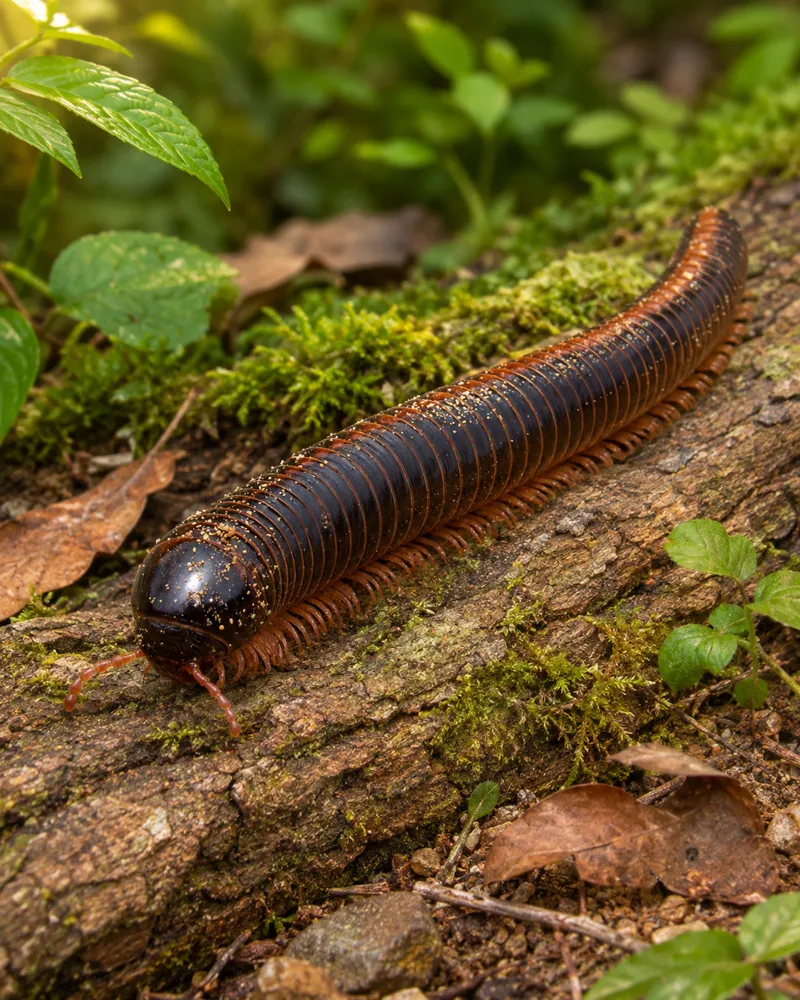
The giant African millipede (Archispirostreptus gigas) comes from East Africa and is one of the largest millipedes in the world. It is calm, slow and completely harmless - it does not bite and has no venom. It does not need complicated equipment: a roomy terrarium, deep moist substrate and a steady supply of decaying leaves and rotting wood are enough. That is why it is often the first pet for people just getting into invertebrates.
Origin, appearance and behavior
Origin and habitat
It comes from East Africa, where it lives in forests and more humid coastal areas. It spends most of its time in the soil and leaf litter and comes to the surface mainly at night or after rain, when humidity is high.
Size and appearance
Adults reach up to about 30 cm in length and nearly 2 cm in thickness. The body is glossy, dark brown to black and made up of many ring-like segments, with two pairs of short legs on almost every segment. Despite the name "millipede", it has nowhere near a thousand legs - the number depends on the number of segments and grows with each moult.
Behavior
It is calm and slow; when frightened it curls into a spiral to protect its head. It is more active in the dark and usually stays buried during the day. It can be kept alone or in a small group, as individuals do not fight - just make sure there is enough space and food for all of them.
Handling
It can be picked up, but only briefly and low over the substrate so it cannot fall. When disturbed, it may release a defensive fluid that irritates the skin and leaves brownish-yellow stains. Wash your hands after handling and keep your hands away from your eyes and face; children should handle it only with adult supervision.
Terrarium and substrate
Terrarium
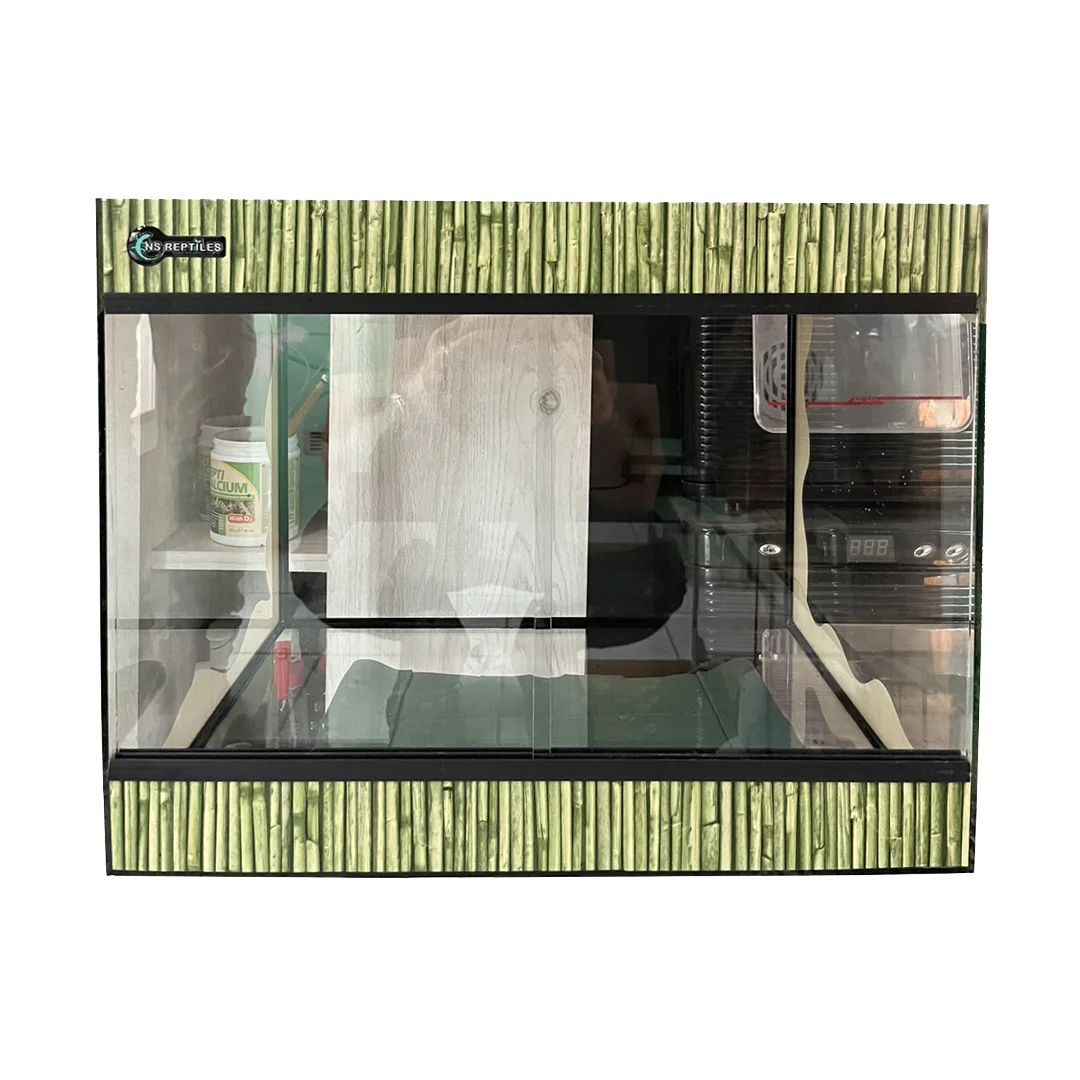
A horizontal terrarium is needed, since floor space matters more than height. For one to three adult millipedes, a terrarium of roughly 45 to 60 cm in length is recommended. The lid must fit well, as millipedes can climb glass, and ventilation should be moderate - enough to prevent mould, but not so much that the substrate dries out quickly.
Substrate
The substrate is the most important part of the setup: at least 10-15 cm deep, and preferably more, so the millipede can burrow and moult undisturbed. A good mix is coco fiber or fertilizer-free soil combined with decaying hardwood leaves and rotting wood (oak, beech). Avoid conifers and anything treated with chemicals.
Decor
Cover the surface with a layer of dry and moist leaves, pieces of cork bark and rotting wood for the millipede to hide under. A water dish is not essential, but a very shallow one is fine as long as the animal cannot drown in it.
Temperature and humidity
Temperature
The ideal range is about 22-28 °C. In a heated home, extra heating is often unnecessary. If it is needed, attach a heat mat to part of a side or back wall of the terrarium, not under the substrate - millipedes burrow when they get warm, so heating from below can overheat or dry them out.
Humidity
Air humidity should be high, around 70-80%. Keep the substrate moist at all times, especially the lower layers, but not muddy - when you squeeze a handful, no water should drip out. The easiest approach is to water one corner of the substrate from time to time and lightly mist the surface.
Lighting
No special lighting or UVB is needed. Daylight from the room is enough, but keep the terrarium out of direct sun, as it overheats quickly.
Diet
Staple diet
Millipedes are detritivores - they feed on decaying plant matter. The staple diet is decaying hardwood leaves and rotting wood, which should always be available in the terrarium because the millipede keeps eating it even when there is no other food. Collect leaves far from roads and sprayed areas.
Vegetables and fruit
As a supplement, offer cucumber, zucchini, carrot and lettuce, and occasionally a piece of banana, apple or melon. Fresh food should be given in small amounts and removed after a day or two, before it goes mouldy.
Calcium
It needs a calcium source for a healthy exoskeleton. The simplest option is to keep a piece of cuttlebone in the terrarium at all times or to sprinkle crushed eggshells over the substrate.
Health and moulting
Lifespan
In good conditions it lives 7-10 years. It grows slowly and reaches full size only after several years.
Moulting
Like other arthropods, the millipede grows by moulting. Before a moult it burrows deep into the substrate, builds a small chamber and stays there for weeks. Do not dig it up or disturb it during this time - the new exoskeleton is soft and easily damaged. This is exactly why deep, moist substrate is essential.
Possible problems
The most common causes of problems are dry substrate, lack of calcium and mould from leftover food. Tiny mites are sometimes seen on millipedes; they are mostly harmless, but large numbers usually mean there is too much leftover food or moisture in the terrarium. If the millipede lies on the surface for long periods, does not respond to touch or has a damaged exoskeleton, check the conditions and see a vet who specializes in exotic animals.
Frequently asked questions about the giant African millipede
No. It does not bite and has no venom. When disturbed, it may release a fluid that irritates the skin, so wash your hands after handling and keep them away from your eyes.
In good conditions it lives 7-10 years.
Adults reach up to about 30 cm in length, but they grow slowly, over several years.
Decaying hardwood leaves and rotting wood, supplemented with vegetables and occasionally fruit. It also needs a calcium source, such as cuttlebone.
At least 10-15 cm, and preferably more. The millipede burrows to rest and moult, so deep, moist substrate is essential.
Recommended products
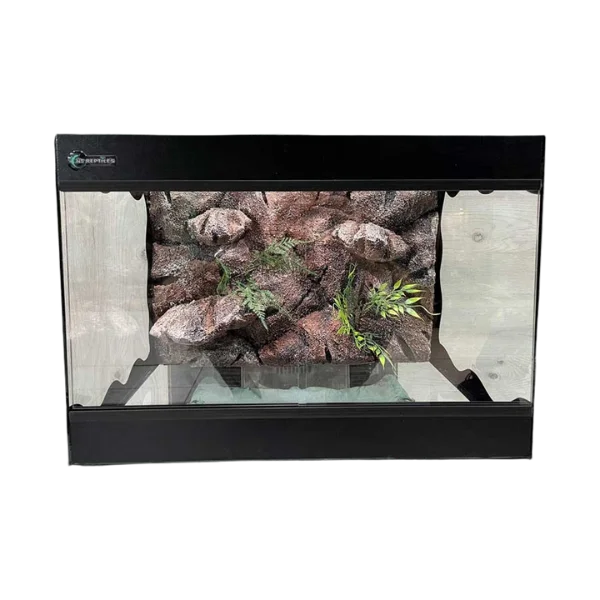
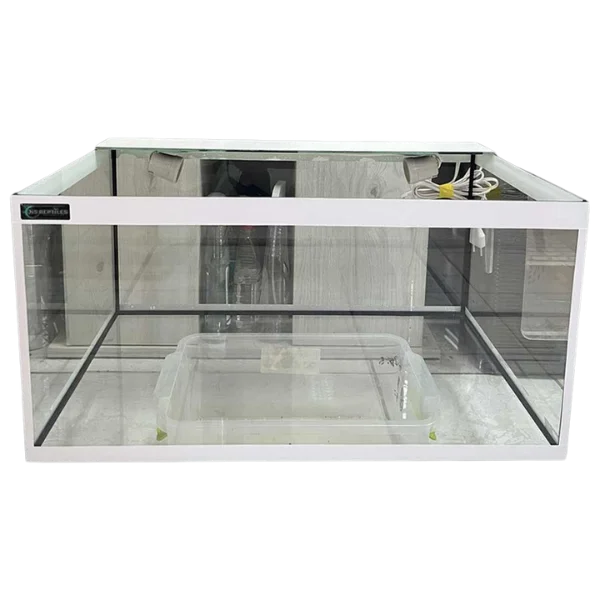
Get a giant African millipede
Contact us by phone or WhatsApp to check availability, get terrarium and equipment recommendations and care advice. We will be happy to help.