Rhacodactylus auriculatus
Gargoyle gecko
A sturdy nocturnal gecko from New Caledonia, named after the bumps on its head that look like small horns. Calm, hardy and undemanding - a good choice for beginners.
For beginnersUpdated:
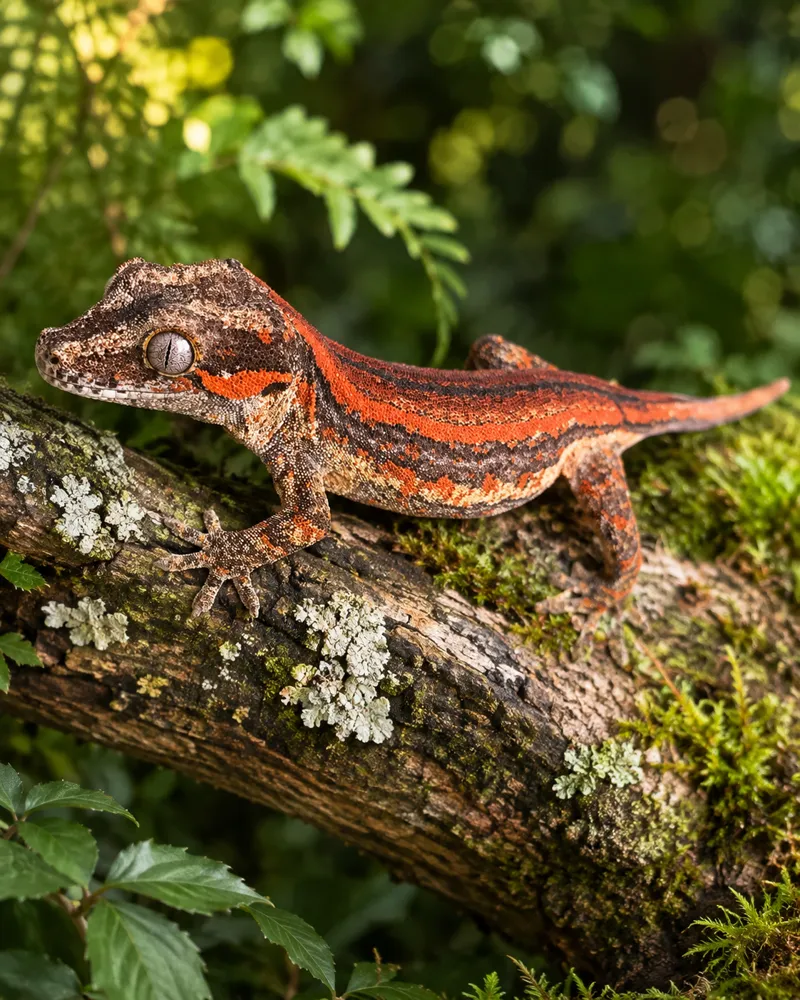
The gargoyle gecko (Rhacodactylus auriculatus) is a close relative of the crested gecko and comes from the same island - New Caledonia. It is bulkier and stockier, with the distinctive knobs at the back of its head that gave it its name. It is active at night, does well at room temperature and eats fruit-based gecko diet and insects. With proper care it lives 15-20 years.
Origin, appearance and behavior
Origin and habitat
The gargoyle gecko lives in the south of New Caledonia, an island in the Pacific Ocean. In the wild it inhabits forest and scrubland, moving along branches and trunks, though it comes lower down than the crested gecko. During the day it hides in hollows and dense vegetation.
Size and appearance
Adults grow to about 20 cm including the tail. The body is stocky and the head broad, with bumps behind the eyes that resemble horns. Coloration ranges from grey and beige to orange and reddish, with stripes, blotches or a reticulated pattern. Unlike the crested gecko, it can regrow a lost tail, although the regrown tail looks different from the original.
Behavior
It is active at dusk and at night and spends most of the day asleep in a hide. It has a calm temperament and, once gradually accustomed to people, tolerates short handling sessions. Young animals can be more nervous and jumpy, so handle them low down over a soft surface at first.
Keeping in groups
It is best to keep one gecko per terrarium. Males must never be housed together, and in other combinations gargoyles may bite each other too, often on the tail. If you want a pair, the terrarium has to be spacious and the animals closely watched.
Terrarium and substrate
Terrarium
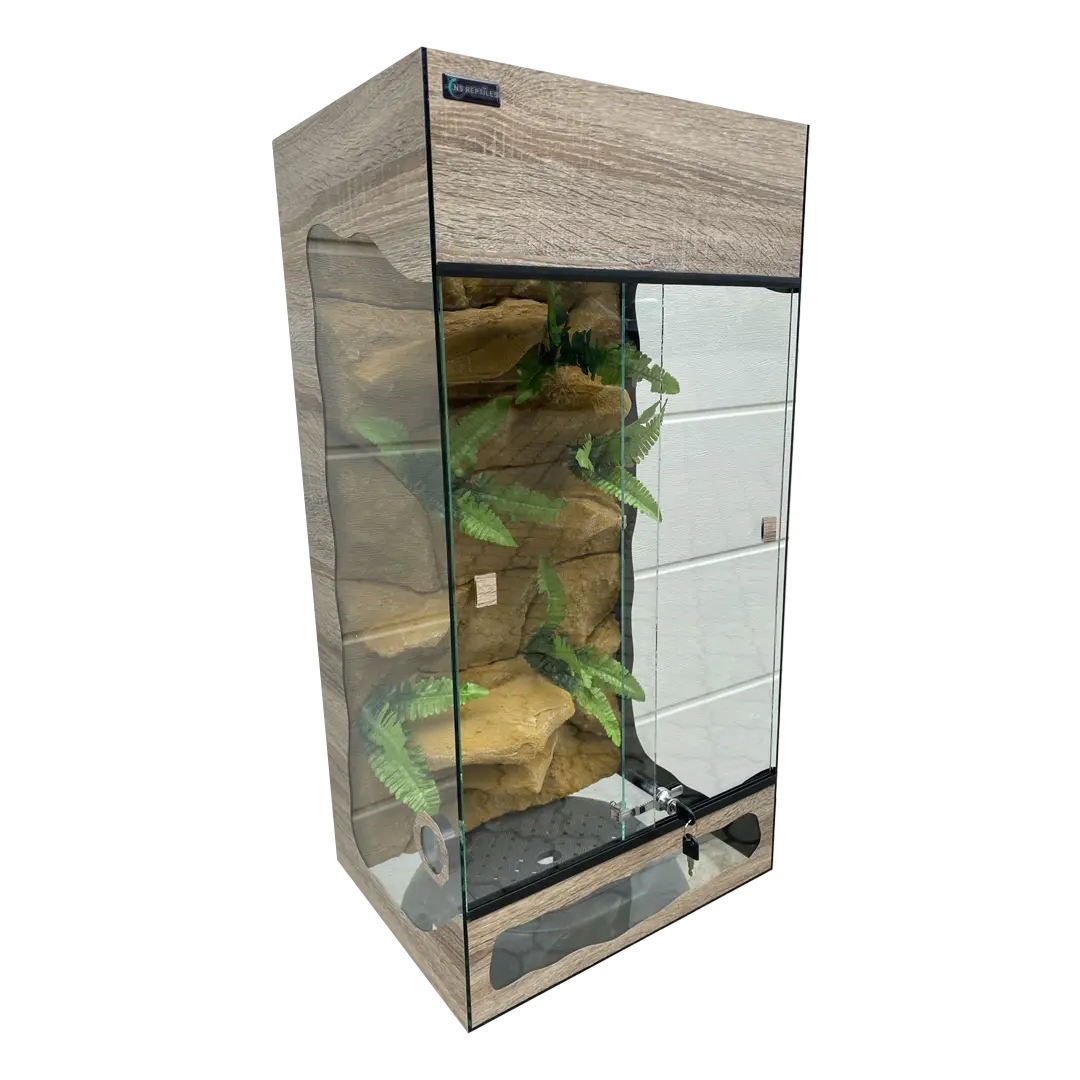
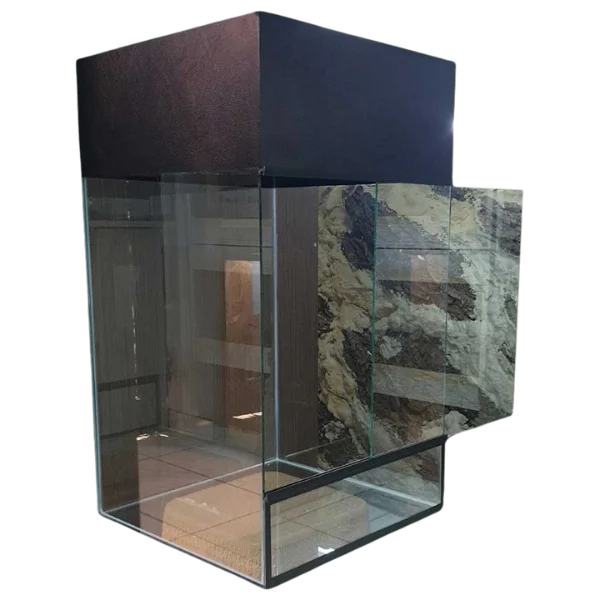
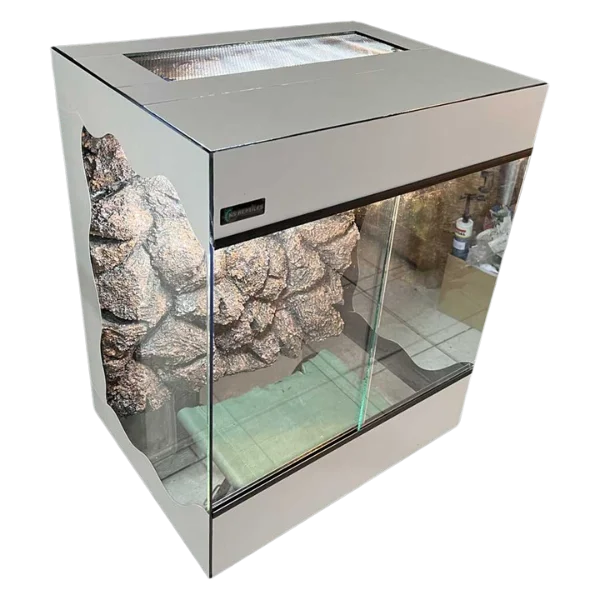
A vertical terrarium is required. For one adult gecko, at least about 45×45×60 cm is recommended - height matters more than length. Inside, add branches at different angles, cork bark, live or artificial plants and at least one hide. Good ventilation is a must, as stale, constantly damp air encourages skin problems.
Substrate
Coco fiber, a soil and coco mix or a planted bioactive substrate all work - anything that holds a little moisture without staying wet. Paper towels are the simplest option for babies. Avoid sand and fine gravel because of the risk of ingestion.
Temperature and conditions
Temperature
Ideal daytime temperatures are 22-27 °C, with 18-22 °C at night. In most homes room temperature is enough, so no heat lamp is needed. Temperatures above 28 °C are stressful and dangerous for this species, so keep the terrarium out of direct sun and away from radiators. If you do heat, use a thermostat.
Lighting
A natural day/night cycle is enough. UVB is not essential, but a low-output UVB lamp with shaded areas can be beneficial. Lighting must not heat the terrarium above the recommended temperatures.
Humidity and water
Humidity should be around 50-70%, rising after misting. Mist once a day, ideally in the evening, and let the terrarium partly dry out between mistings. The gecko drinks droplets from leaves and glass, but it is good to provide a shallow water dish as well.
Diet
Staple diet
The gargoyle gecko is an omnivore. The staple is a complete fruit-based gecko diet (such as Repashy or Pangea), which is nutritionally balanced. Offer it in a dish placed up high and replace it after 24-48 hours.
Insects
Gargoyles readily eat insects, more so than crested geckos. Offer crickets, dubia or other roaches of the right size 1-2 times a week - an insect should be no larger than the space between the gecko's eyes. Dust insects with calcium before feeding.
Feeding frequency
Babies are fed daily or every other day. Adults need food 3-4 times a week. Watch body condition: the tail base and hips should not look sunken, but the gecko should not be obese either.
Supplements
Dust insects with calcium; if you don't use UVB, choose calcium with vitamin D3. Add a reptile multivitamin about once a week. Complete powdered diets already contain the necessary supplements, so they don't need anything extra.
Health and breeding
Lifespan
The gargoyle gecko is a hardy species and lives 15-20 years in captivity. Most problems come from excessive heat, an unbalanced diet or a terrarium that is constantly wet.
Possible health problems
The most common are metabolic bone disease (from calcium deficiency), stuck shed, especially on the toes and tail tip, and bite injuries when kept in groups. Remove retained shed from the toes after a soak in lukewarm water. If you notice loss of appetite, lethargy or a soft jaw, see a vet who specializes in exotic animals.
Breeding
Sex can be reliably determined in older animals, when males develop visible bulges behind the vent. Only fully grown animals should be bred, with females no younger than about a year and a half. The female lays 2 eggs per clutch, several times per season, and incubation takes roughly 60-90 days depending on temperature.
Gargoyle gecko FAQ
Yes. It is calm, hardy and needs no heat lamp if room temperature is suitable. It eats a complete fruit-based diet and insects.
With proper care, a gargoyle gecko lives 15-20 years in captivity.
22-27 °C during the day and 18-22 °C at night. Above 28 °C becomes dangerous, so keep the terrarium away from sun and radiators.
A complete fruit-based gecko diet (Repashy, Pangea) as the staple, plus calcium-dusted insects 1-2 times a week.
Yes. Unlike the crested gecko, the gargoyle can regrow its tail, but the new tail has a different shape and color.
Never two males. Gargoyles may bite each other in other combinations as well, so the safest option is one gecko per terrarium.
Recommended products
Get a gargoyle gecko
Contact us by phone or WhatsApp to check availability, get terrarium and equipment recommendations and care advice. We will be happy to help.