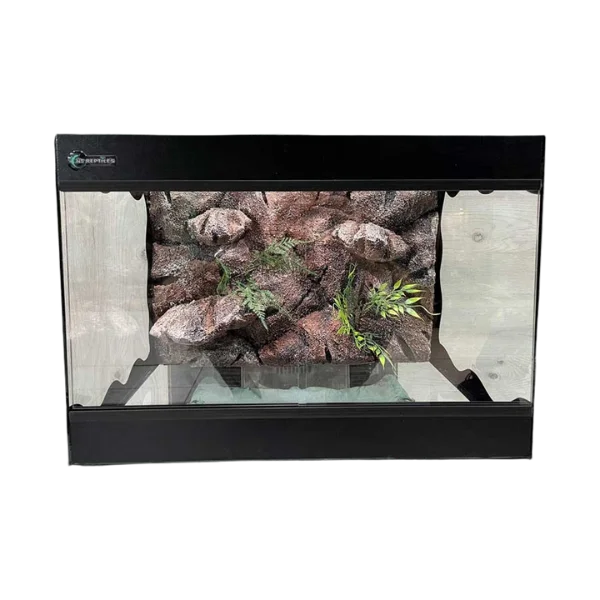
Hemitheconyx caudicinctus
Fat-tailed gecko
A calm, ground-dwelling species from West Africa - an excellent choice for beginners. It gets used to handling easily and does not need complicated husbandry.
For beginnersUpdated:
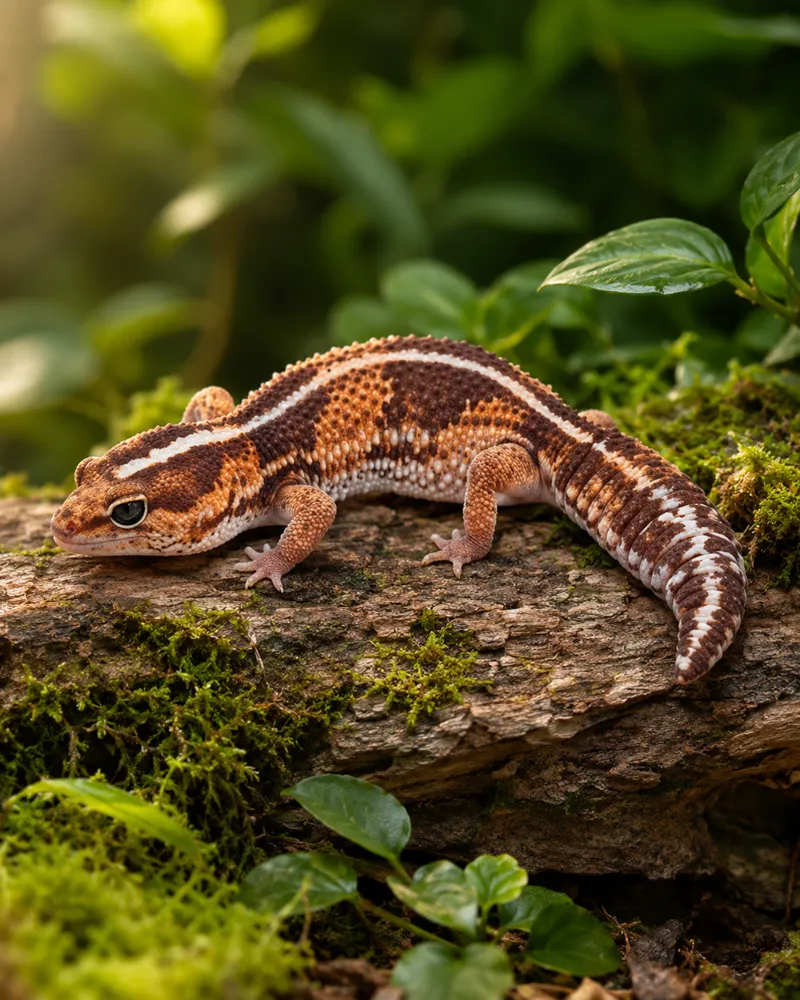
The fat-tailed gecko comes from the dry and humid savannas of West Africa - from Senegal to Cameroon. In the wild it hides in humid shelters such as termite mounds and rock crevices, and comes out at night to look for food. Its typical features are a rounded head, movable eyelids and vertical pupils, brown-beige banding with a white line along the back, and a thick tail that serves as a fat store. Unlike most geckos, it has no sticky toe pads, so it lives only on the ground. In captivity it is known for its calm nature and for adapting easily to handling, which makes it one of the most popular beginner reptiles. With proper care it lives 15 to 20 years.
Care and setup
The terrarium habitat should have at least three hides: warm, cool and humid - just like in the wild. A flat basking stone, stumps and leaves add to the animal's well-being and make the terrarium visually appealing.
Terrarium
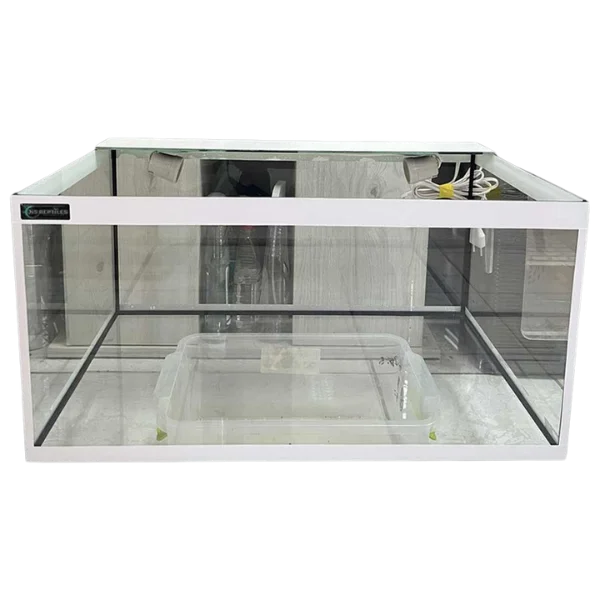
The minimum size for one animal is 60x40x30 cm. The terrarium should have at least three hides: warm, cool and humid. Recommended decor includes a flat basking stone, stumps, leaves, and artificial or live plants.
Substrate
For adults, a mix of organic soil, sand and clay is recommended (40% soil, 40% sand, 20% clay). Babies are kept on paper towels until they finish quarantine. Droppings are removed daily, and the substrate is fully replaced every 3 to 6 months.
Temperature and heating
The warm side of the terrarium should be 30-32 °C, the cool side 21-25 °C, and the nighttime temperature can drop to 16 °C. Heat is provided by a spot lamp or a heat mat with a thermostat that prevents overheating.
Lighting
A daily lighting cycle of 10 to 12 hours is essential. UVB lighting is not required, but a UVB 5.0 lamp can contribute to better health. At night all lights are switched off to mimic the natural rhythm.
Humidity and water
Optimal humidity in the terrarium is 50-60%. A humid hide with moss or coco fiber helps with shedding. A shallow dish of fresh water should always be available - change it daily.
Diet
Fat-tailed geckos are insectivores - they eat crickets, dubia roaches, mealworms and black soldier fly larvae. Calcium with D3 is added at every feeding, and multivitamins once a week. Babies are fed daily, adults 2 to 3 times a week.
Breeding
The breeding season begins after a cooling period. Females lay 2 eggs per clutch. Incubation takes 55 to 70 days at a temperature of 27 to 29 °C - the incubation temperature can affect the sex of the babies.
Health and prevention
Common health problems are metabolic bone disease, stuck shed and impaction. Prevention means a proper diet with calcium, the right humidity and temperature, and regular terrarium cleaning. If you suspect illness, consult a vet who specializes in exotic animals.
Recommended products
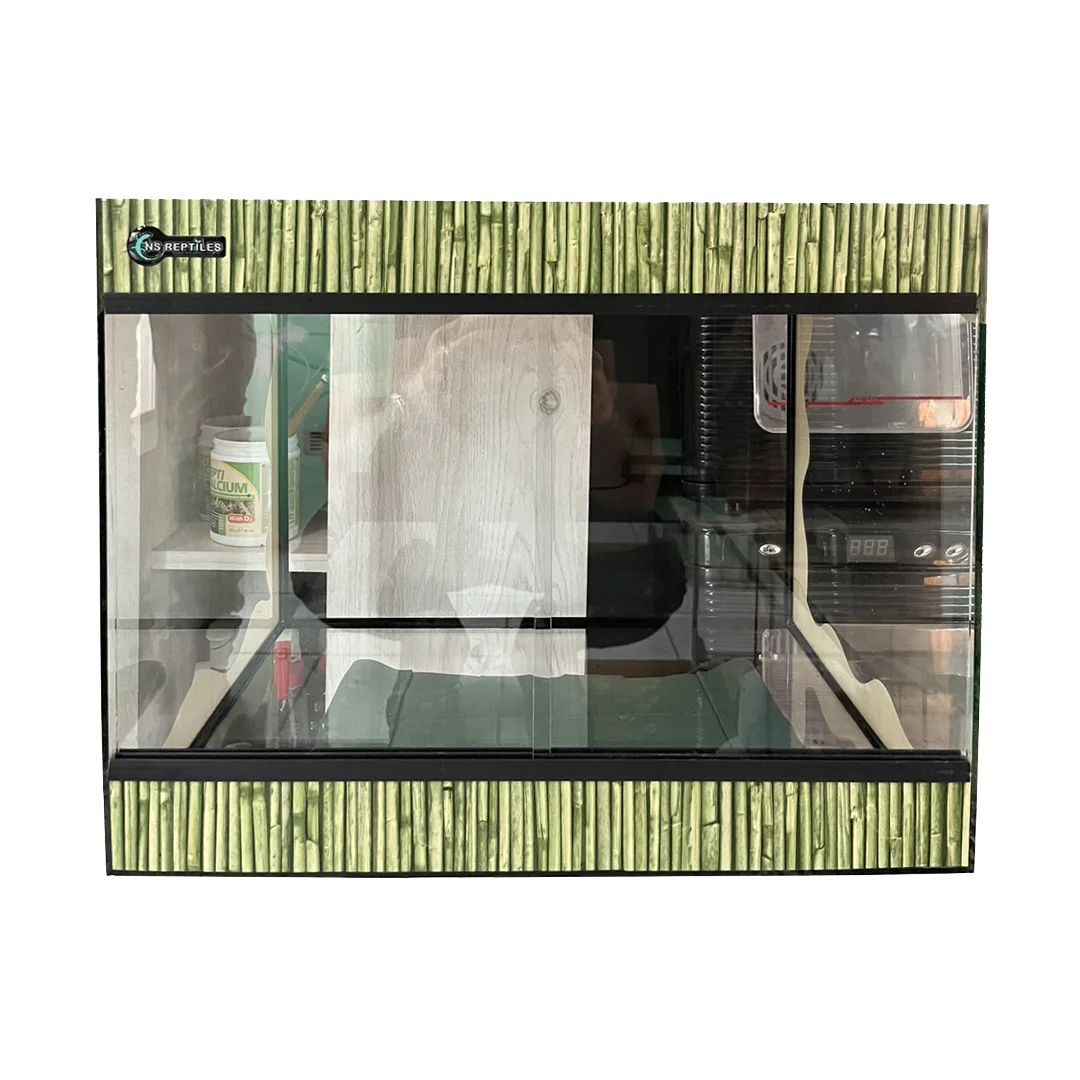
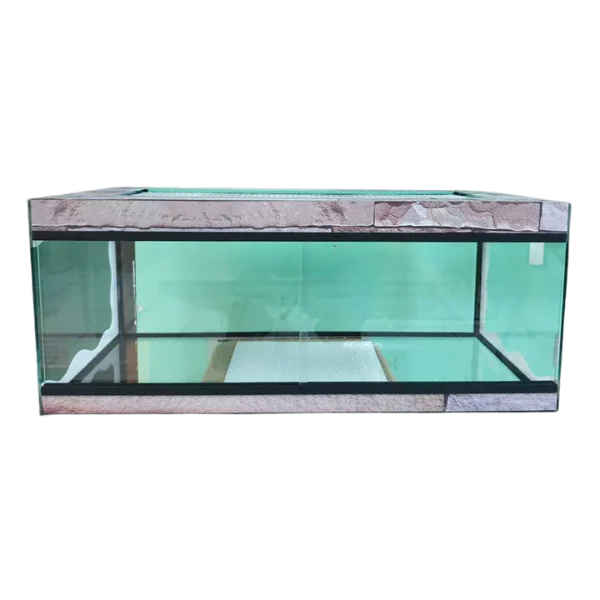
Contact NS Reptiles
For questions about getting a fat-tailed gecko, its care or equipment - we are here. Give us a call or send a message.