Stenodactylus sthenodactylus
Elegant gecko
A tiny desert gecko from North Africa and the Middle East, up to about 10 cm long. It has large eyes and thin toes without sticky pads - it lives on the ground, digs in sand and is active at night.
Updated:
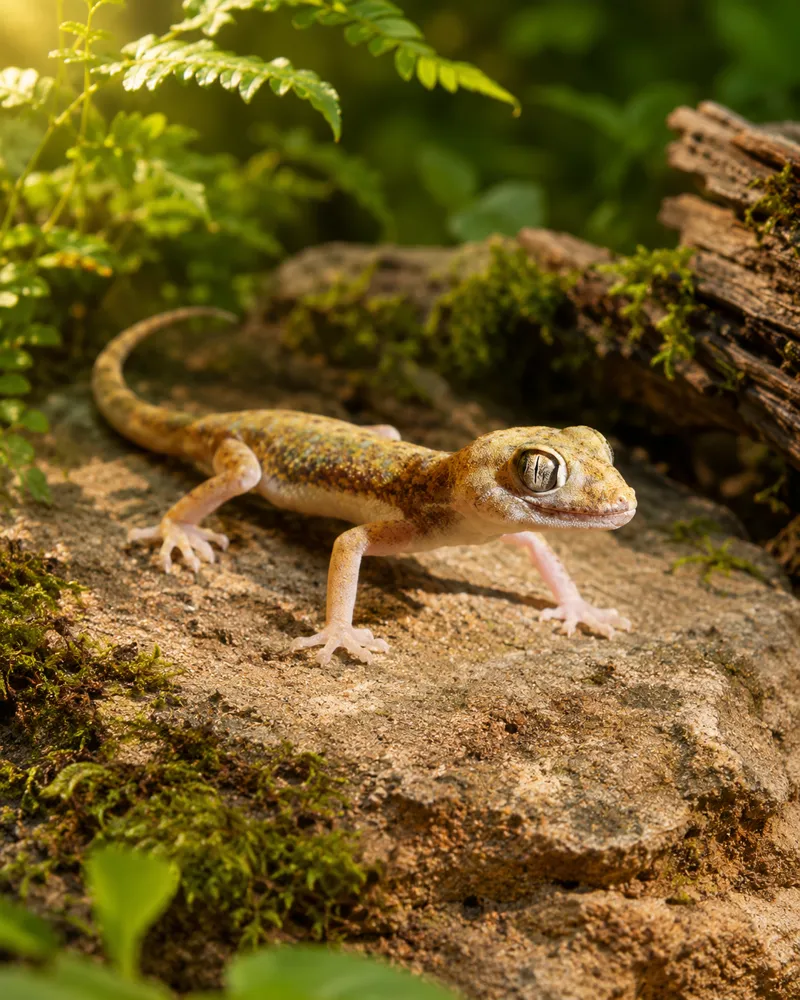
The elegant gecko (Stenodactylus sthenodactylus) is a small, ground-dwelling desert gecko. Unlike crested or mourning geckos, it does not climb glass and branches; instead it runs across sand and hunts small insects at night. It needs a low, dry terrarium with sandy substrate and a warm spot. It takes up little space and is fascinating to watch, but it is delicate and not suited to handling.
Origin, appearance and behavior
Origin and habitat
It ranges across North Africa and the Middle East, from the Sahara to the Arabian Peninsula. It lives in sandy and gravelly-sandy deserts and semi-deserts, hiding by day in burrows, under stones and in crevices and coming out only after dark.
Size and appearance
Adults grow to about 8-10 cm including the tail. The body is slender and delicate, the skin sandy to light brown with small pale and dark spots that camouflage it perfectly on sand. The eyes are large, and the toes are thin and lack adhesive pads, so it cannot climb smooth surfaces.
Behavior
It is active at night and at dusk, when it explores the terrarium and hunts. During the day it mostly stays in a hide or buried in sand. It is shy and fast, and its skin is thin and delicate, so it should not be handled unless necessary. It may drop its tail when frightened.
Keeping in groups
It can be kept alone or as one male with one or two females. Two males should not be kept together, as they fight. In a group, each gecko should have its own hide.
Terrarium and substrate
Terrarium
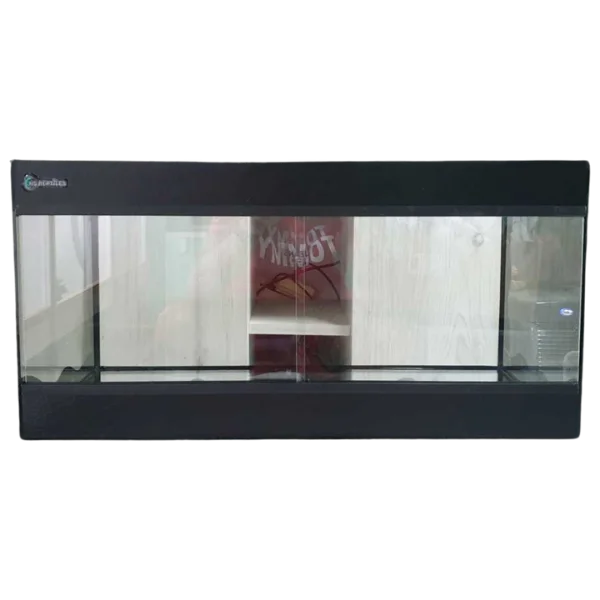
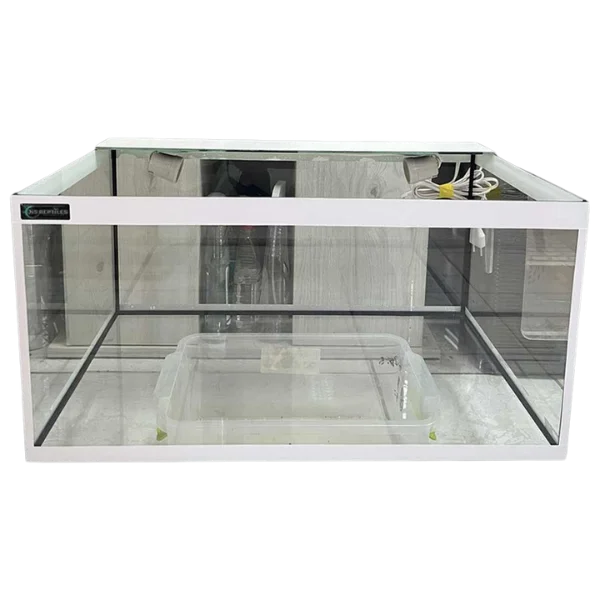
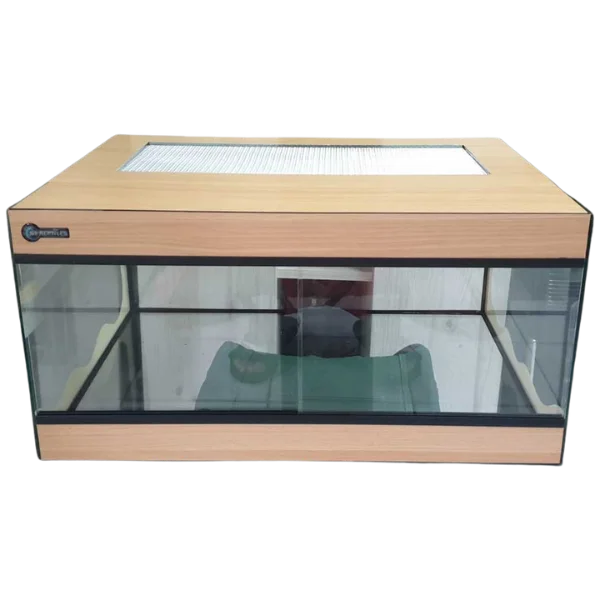
A low, horizontal terrarium is needed - floor space matters, not height. For one to three geckos, about 60×30×30 cm is enough, and a bigger floor is always better. Add several hides, flat stones, pieces of cork and low decorations, but nothing that could collapse when the gecko digs underneath. Ventilation must be good and the lid secure.
Substrate
Use a 5-10 cm layer of fine, washed, dust-free sand or a sand and clay mix that holds the shape of burrows. Lightly moisten the substrate from below in one corner from time to time so the gecko has a slightly more humid spot. Do not use calcium sand, gravel or coco fiber.
Temperature and conditions
Temperature
A temperature gradient is required: a warm spot of about 30-33 °C, with the rest of the terrarium at 25-28 °C. At night it can drop to about 20-22 °C. Heat with a heat mat under part of the floor or a heat bulb, always on a thermostat, and check temperatures with a thermometer at substrate level.
Lighting
Lighting should follow a day/night rhythm of about 12 hours. As a nocturnal species it does not strictly need UVB, but low-level UVB with enough hides can be beneficial. Do not leave white light on at night.
Humidity and water
The air should be dry, around 30-40% humidity, with one more humid hide or corner to help with shedding. Provide a small, shallow water dish and lightly mist part of the terrarium a few evenings a week - these geckos readily drink droplets. The terrarium must not stay damp.
Diet
Staple diet
The elegant gecko is an insectivore and does not eat fruit or fruit-based diets. It feeds on small insects: small crickets, young roaches and occasionally small larvae. An insect must be smaller than the gecko's head.
Feeding frequency
Young geckos are fed daily or every other day, adults 2-4 times a week. Release insects in the evening, when the gecko is active, and do not leave surplus live insects in the terrarium overnight.
Supplements
Dust insects with calcium at most feedings; if you don't use UVB, use calcium with vitamin D3. Add a reptile multivitamin about once a week. Feed the insects good-quality food before offering them so they are more nutritious.
Health and breeding
Lifespan
Data on captive lifespan is limited; about 5-8 years with good care is the figure most often given. A proper temperature gradient, dry air and regular supplementation are key.
Possible health problems
The most common problems are dehydration, stuck shed when there is no humid hide, metabolic bone disease from calcium deficiency and respiratory infections in a terrarium that is too damp or cold. If you notice weight loss, lethargy or labored breathing, see a vet who specializes in exotic animals.
Breeding
In adults, males can be recognized by the bulges behind the vent. The female lays one or two hard-shelled eggs, several times per season, and buries them in the moister part of the sand. The eggs are incubated separately, and hatchlings emerge after roughly two months, depending on temperature.
Elegant gecko FAQ
A low, horizontal terrarium with sandy substrate. For one to three geckos, about 60×30×30 cm is enough.
No. They have no adhesive toe pads, so they live on the ground and cannot climb smooth surfaces.
A warm spot of about 30-33 °C, 25-28 °C in the rest of the terrarium and about 20-22 °C at night. Heating should always run through a thermostat.
Only small insects - small crickets and young roaches, dusted with calcium. They do not eat fruit or fruit-based diets.
Yes, one male with one or two females. Two males should not be kept together.
Recommended products
Get an elegant gecko
Contact us by phone or WhatsApp to check availability, get desert terrarium and equipment recommendations and care advice. We will be happy to help.