Rhacodactylus ciliatus
Crested gecko
A calm, nocturnal lizard from New Caledonia - popular in the hobby and ideal for beginners. It is known for the prominent "eyelashes" above its eyes and its prehensile tail.
Updated:
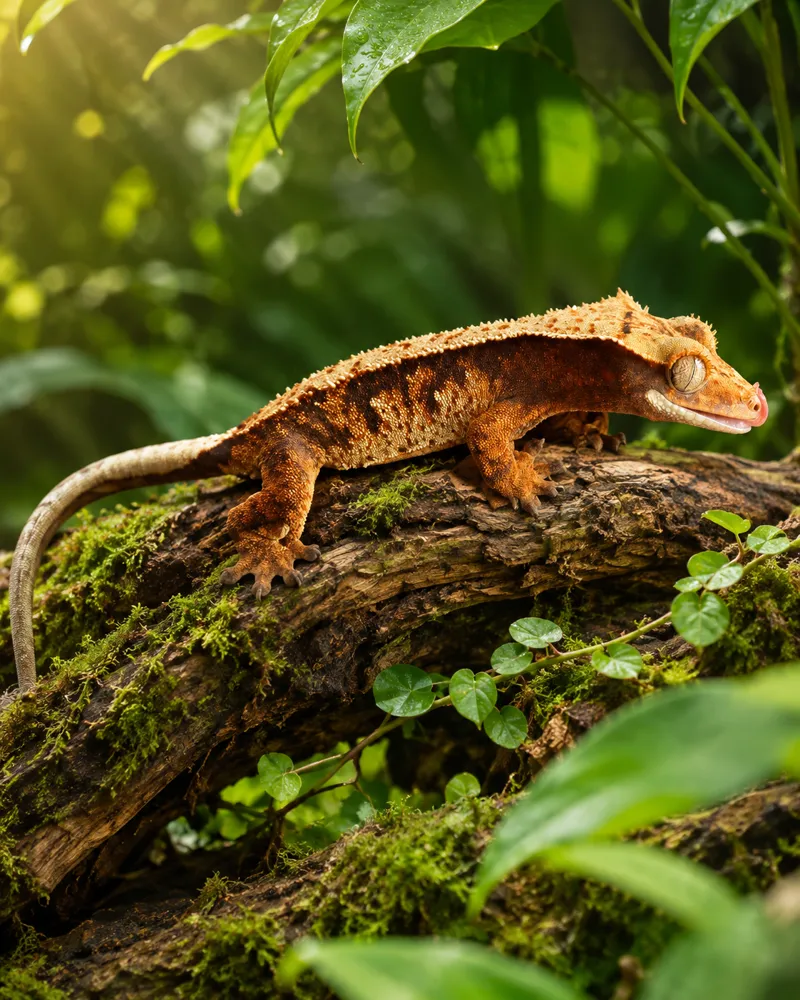
The crested gecko is a popular, calm and nocturnal lizard from New Caledonia. Thanks to its calm temperament and relatively simple care requirements, it is an ideal choice for beginners in the hobby. It is available in a wide range of morphs and colors, and with proper care it is a hardy and long-lived species.
Origin, appearance and behavior
Origin and habitat
The crested gecko comes from New Caledonia - tropical islands in the Pacific Ocean. In the wild it lives in humid tropical forests as an arboreal species, spending its time in the tree canopy. For a long time it was thought to be extinct until it was rediscovered in 1994.
Size and appearance
Adults reach a length of 20 to 25 cm including the tail and weigh 30 to 45 g. Their trademark is the "eyelashes" - rows of scales above the eyes that run along the body. They are available in a wide range of morphs and colors: flame, harlequin, dalmatian, pinstripe and many others. The tail is prehensile and does not grow back if lost.
Behavior
A nocturnal animal - it hides during the day and is active at dusk and at night. It is calm and non-aggressive; it tolerates handling well once it gradually gets used to people. It does not like bright light and prefers a dim environment. It is suitable for beginners precisely because of its calm temperament and relatively simple care requirements.
Availability and legal status
A popular species in the hobby, easy to get from trusted breeders. It is legal to keep in Serbia without special paperwork. At NS Reptiles we work only with healthy animals sourced from trusted breeders.
Terrarium and substrate
Terrarium
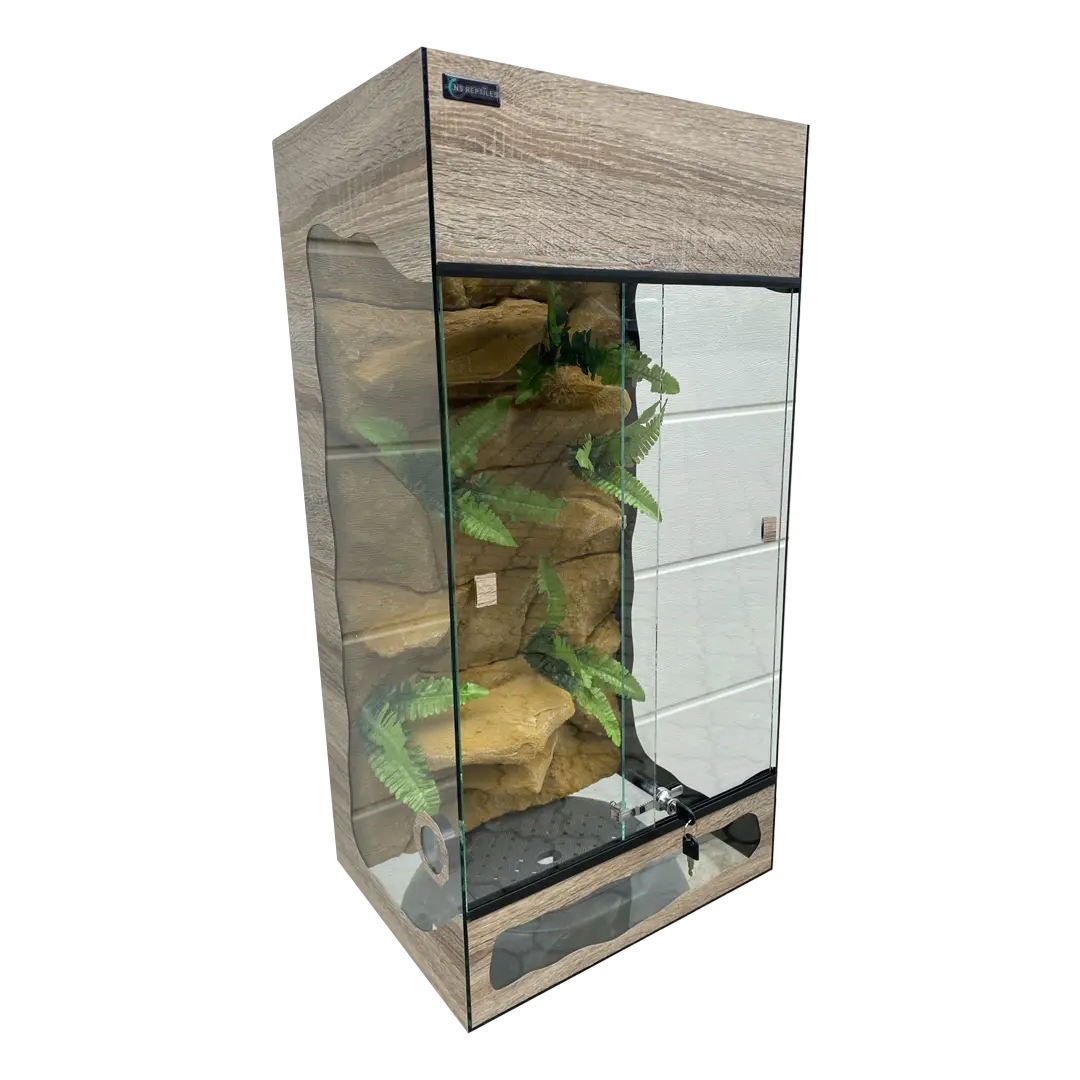
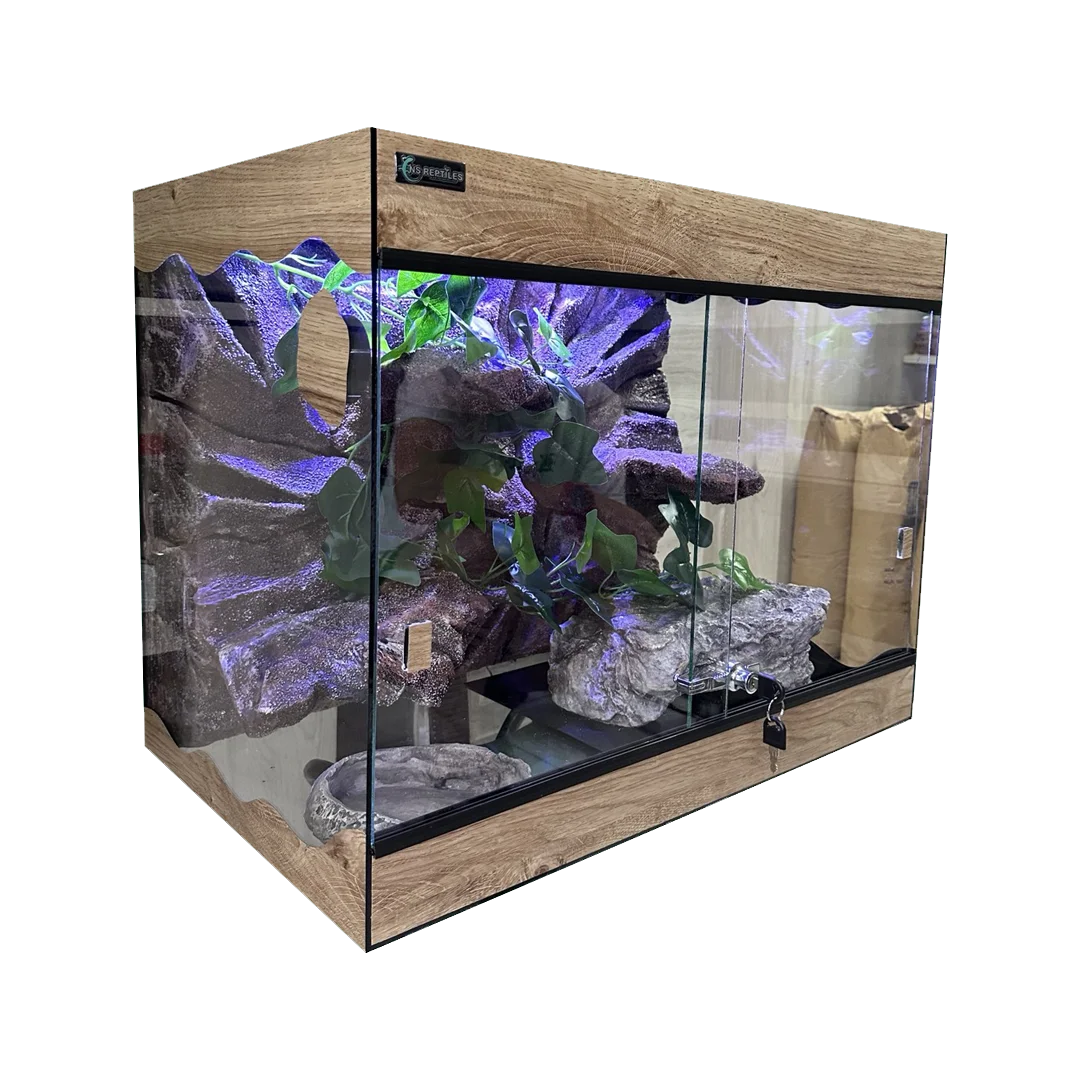
A vertical terrarium is a must - the minimum size for an adult is 30×30×45 cm. Height matters more than length because this species climbs. Provide branches, artificial or live plants and hides for climbing and hiding. Good ventilation is key, but avoid direct drafts.
Substrate
Coco fiber or sphagnum moss, which hold moisture, are recommended. Paper towels are safer for babies because they rule out the risk of swallowing substrate. Avoid sand and sharp substrates - there is a risk of impaction. A moist substrate also helps with shedding.
Temperature and conditions
Temperature
Daytime temperature: 22-26 °C. Nighttime temperature: 18-20 °C. Heating is not required if the room temperature stays in this range. They do not need UVB lighting, but low-level UVB can contribute to the animal's overall health and activity.
Lighting
A natural day/night cycle is enough. If artificial lighting is used, it should be gentle and must not heat the terrarium above the recommended temperature. Direct bright light stresses this species.
Humidity and water
Optimal humidity is 60-80%. Misting with water 1-2 times a day provides the hydration it needs and makes shedding easier. The crested gecko does not drink from a water dish - it laps water droplets from leaves, glass and decorations after misting. It also gets water from the fruit it eats.
Diet
Staple diet
They are omnivores - they eat both fruit and insects. The staple diet is commercial fruit mixes made for this gecko species, such as Repashy or Pangea formulas. These mixes are nutritionally balanced and can be the only source of food if offered regularly.
Insects and fruit
Insects are offered as a treat 1-2 times a week: crickets, dubia roaches and locusts of the right size. Every insect must be dusted with calcium powder before feeding. Fruit (banana, mango, peach) can be given occasionally in small amounts.
Feeding frequency
Babies are fed every day because they are growing. Adults (older than one year) are fed 3-4 times a week. The fruit mix is left in a small dish and replaced every 24-48 hours so it does not go sour.
Supplements
Calcium without vitamin D3 is dusted onto insects at every feeding. A reptile multivitamin is added once a week. Proper supplementation prevents hypocalcemia - one of the more common health problems in this species.
Health and breeding
Lifespan
The crested gecko is generally a hardy and long-lived species. In captivity, with proper care, it lives 15-20 years. In good conditions, illness is rare.
Possible health problems
The most common problems are: tail loss (it does not grow back), impaction from unsuitable substrate, bad sheds and hypocalcemia. Prevention means a proper diet, calcium supplementation and the right humidity. If health problems occur, see a vet who specializes in exotic animals.
Breeding
The sex can be reliably determined only after six months of age. Females lay 2 eggs per clutch every 4-5 weeks during the breeding season. Incubation takes 60-90 days at a temperature of 22-26 °C. Babies are fed the same formula as adults, but in smaller amounts and more often.
Recommended products
Get a crested gecko
Contact us by phone or WhatsApp to check availability, get equipment recommendations and care advice. We will be happy to help.