
Lampropeltis getula
Common kingsnake
A hardy, active North American snake with glossy black scales and light bands. It feeds well, adapts easily and is a good choice for beginners - with one rule: it is always kept alone.
For beginnersUpdated:
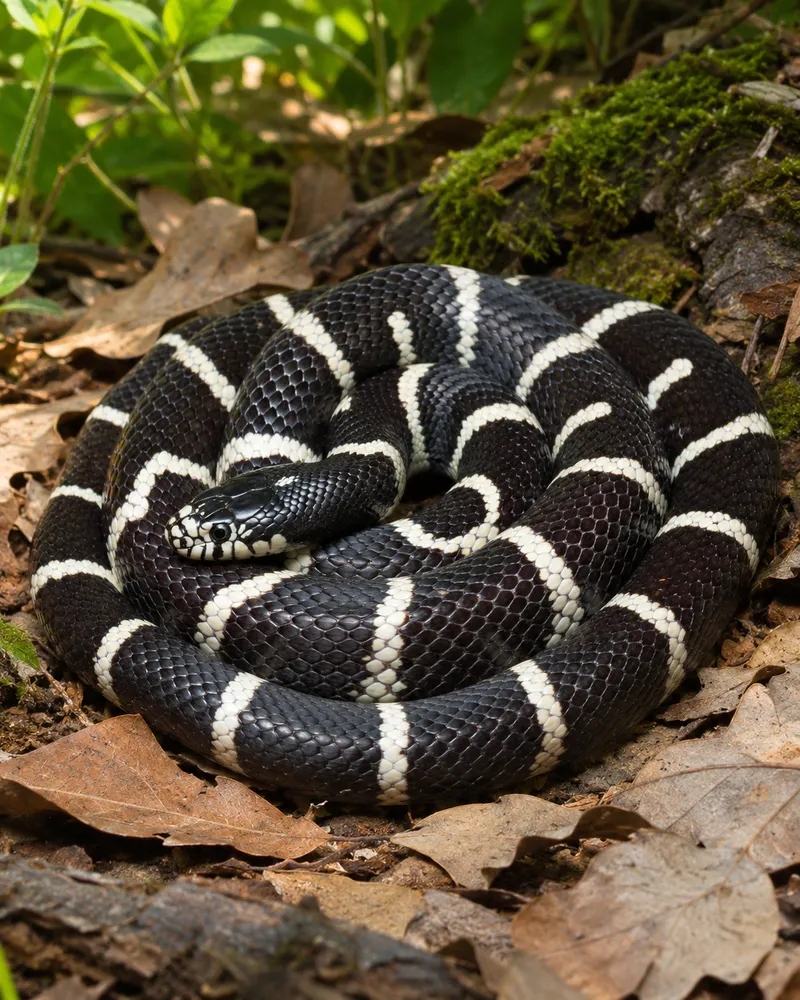
The common kingsnake is one of the best-known snakes in North America. In the broad sense it includes several closely related forms spread across much of the United States and northern Mexico, so it lives in very different habitats - from forests and swamp edges to dry scrubland. The classic look is a glossy black body with white or yellowish bands or speckles, and the pattern varies from form to form. Adults are 90-150 cm long and live 15-20 years in captivity, sometimes longer.
Behavior and handling
A snake that eats snakes
It got its name because in the wild it also hunts other snakes, including venomous rattlesnakes, whose venom it is largely resistant to. That is why a kingsnake is always kept alone in the terrarium - with another snake, even of its own species, attacks and cannibalism can happen.
Handling
It is non-venomous and kills prey by constriction. Hatchlings are often nervous: they vibrate their tails, release an unpleasant musk or bite, but with short, regular handling they usually calm down. It has a strong feeding response and may mistake a hand for prey - feed with tongs and wash your hands after touching food. Do not handle it for 48 hours after a meal.
Terrarium and substrate
Terrarium
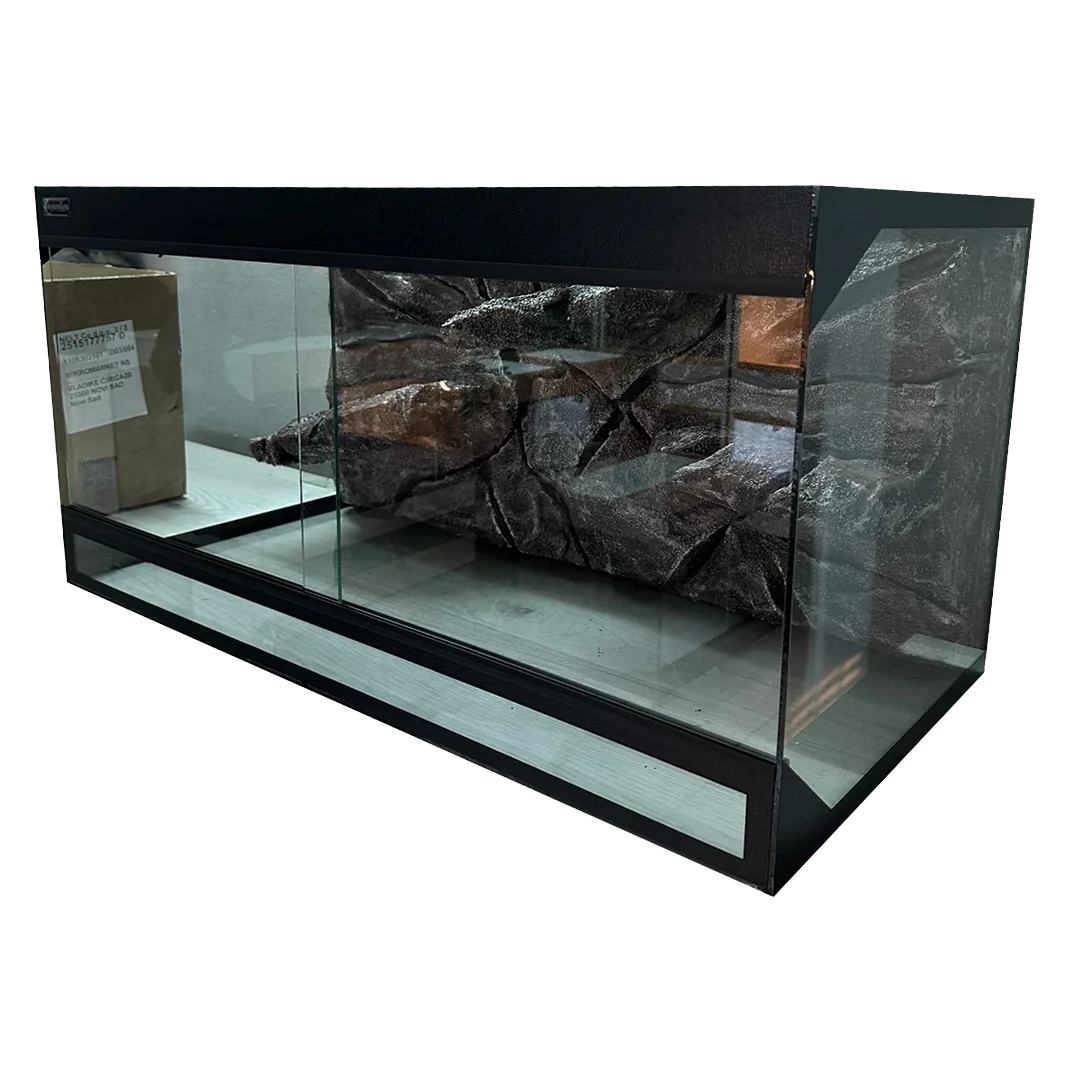
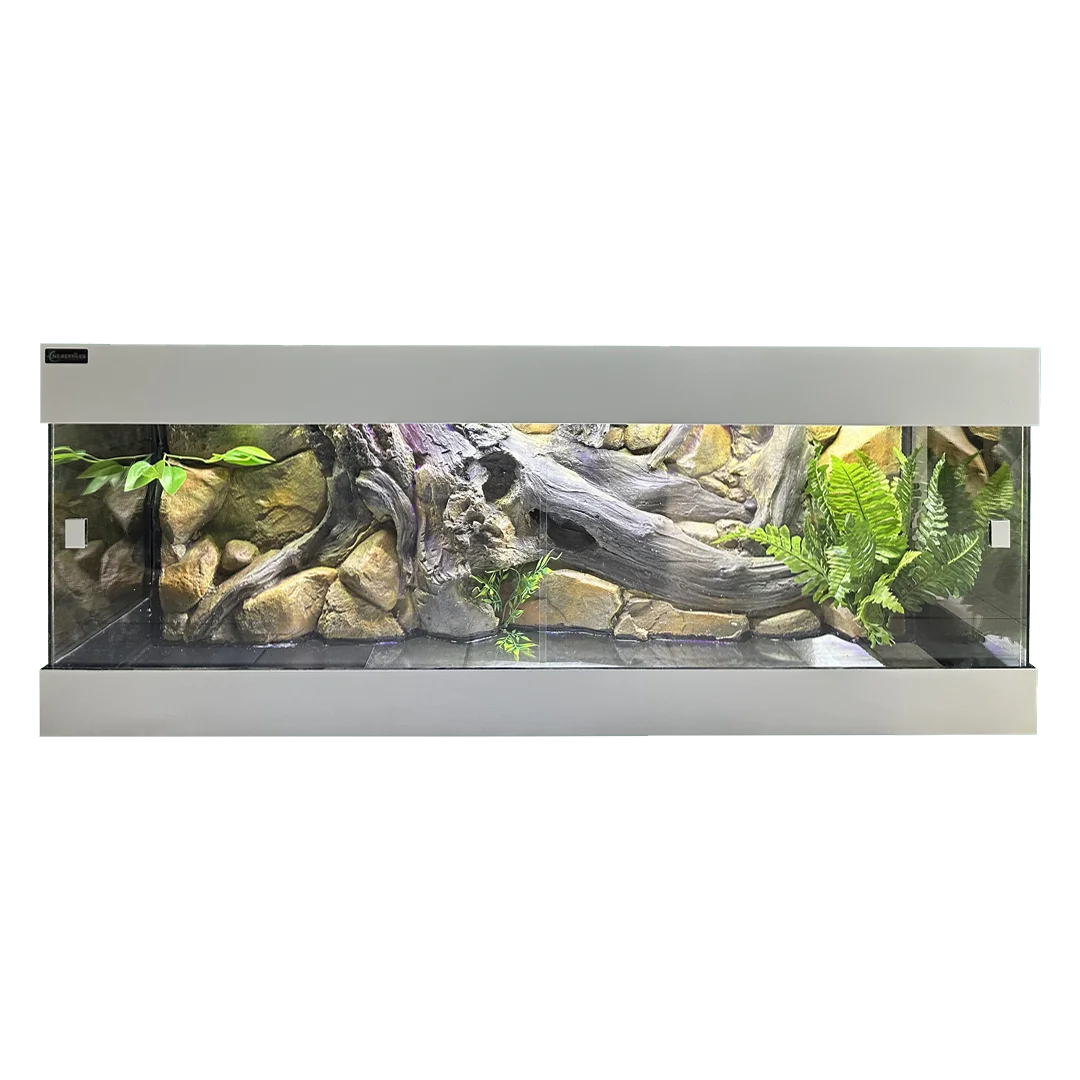
An adult should have a terrarium of at least 90×45×45 cm, and larger individuals about 120 cm of length. The kingsnake is mainly ground-dwelling but likes to explore, so branches and rocks are useful too. Provide a hide on both the warm and cool sides and a water bowl. The lid must be tightly secured - it is a skilled escape artist.
Substrate
Aspen shavings, coco fiber or a soil and coco mix; paper for quarantine and sick animals. Avoid cedar and pine because of their fumes. Remove soiled substrate right away and replace all of it regularly.
Temperature and humidity
Temperature
Basking spot: 28-32 °C. Cool side: 22-25 °C. At night not below 20 °C. Heating: a heat mat, cable or bulb controlled by a thermostat.
Lighting
UVB is not required. A regular day and night cycle on a timer is enough.
Humidity and water
Humidity: 40-60%, with a humid hide during shedding. Fresh water in a bowl the snake can climb into must always be available.
Diet
In captivity it is fed frozen-thawed rodents. Hatchlings eat pinkies every 5-7 days, adults eat adult mice or small rats every 10-14 days. Prey should not be wider than the thickest part of the snake's body. Kingsnakes almost never refuse food, so obesity is a more common problem than poor appetite - do not overfeed. Always feed them individually.
Health and breeding
Health
It is a hardy species; the most common problems are obesity, stuck shed, respiratory infections and mites. Keep new animals in quarantine for a while. If you notice mucus around the mouth, labored breathing or sudden weight loss, see a vet who specializes in exotic animals.
Breeding
Sexual maturity is reached at 2-3 years, and a winter cooling period before mating is usual. Male and female are put together only for mating and under supervision, because of the risk of cannibalism. Females usually lay 5-20 eggs, and incubation takes about 55-65 days at 27-29 °C.
Common kingsnake FAQ
No, the kingsnake is not venomous. It kills prey by constriction and is harmless to humans.
No. In the wild it also eats other snakes, so in the terrarium it is always kept alone, even apart from snakes of its own species.
Adults are 90-150 cm long, depending on the form and origin.
With proper care it lives 15-20 years in captivity, and some individuals longer.
Frozen-thawed rodents: hatchlings eat pinkies every 5-7 days, adults eat adult mice or small rats every 10-14 days.
Yes. It is hardy, feeds well and its requirements are not demanding. Hatchlings can be nervous, but usually calm down quickly.
Recommended products
Contact NS Reptiles
For availability, care questions or equipment for a kingsnake - we are here. Give us a call or send a message on WhatsApp.