Crotaphytus collaris
Collared lizard
A fast, lively lizard from the rocky regions of the USA and Mexico, named after the black "collar" around its neck. It runs on its hind legs when fleeing and needs plenty of space, strong heat and UVB light in the terrarium.
Updated:
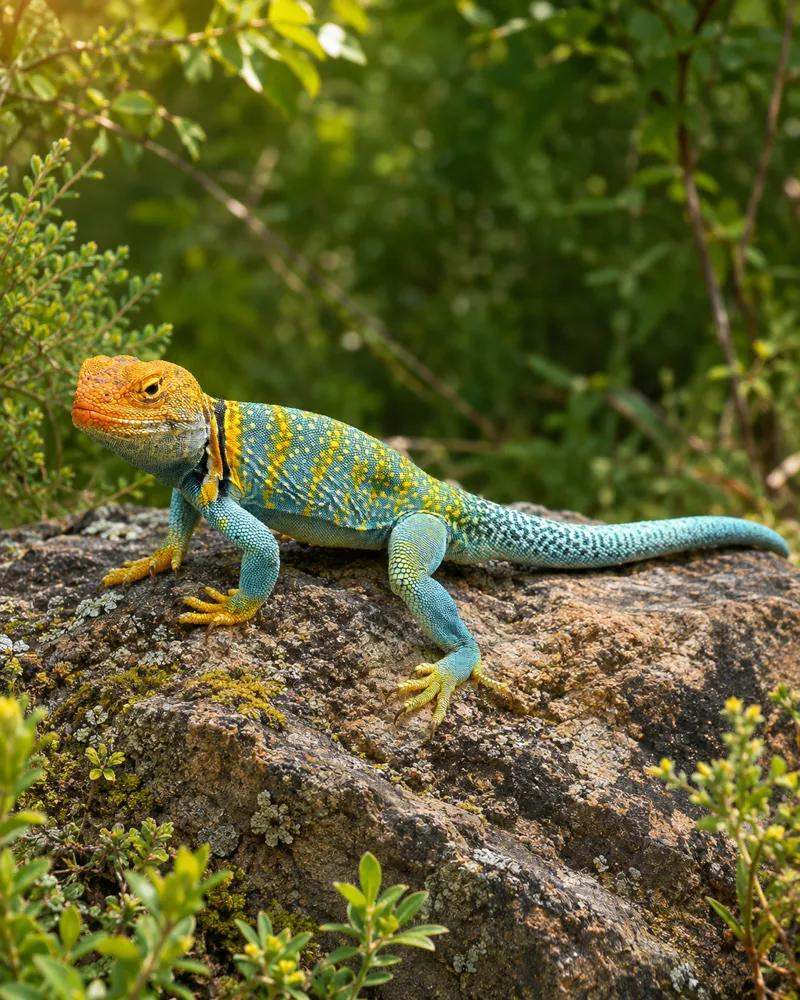
The collared lizard (Crotaphytus collaris) is a medium-sized diurnal lizard from the dry, rocky regions of North America. It is known for its large head, the two black bands around its neck and, in males, striking colors. It is very active and fascinating to watch, but it is not a species for frequent handling - it suits keepers who want a spacious, warm and well-lit terrarium.
Origin, appearance and behavior
Origin and habitat
The collared lizard lives in the central and southwestern USA and northern Mexico. It inhabits dry, open country with plenty of rocks - rocky hillsides, canyons and stony grassland - where it basks on boulders and watches its surroundings.
Size and appearance
Adults reach about 20-35 cm in total length, more than half of which is the long tail. The head is large, and two black bands run around the neck, giving the species its name. Males are usually more brightly colored - greenish, bluish or turquoise with yellow tones - while females are brown or olive.
Behavior
It is active during the day and spends a lot of time basking on rocks. It is extremely fast and, when fleeing, rises up and runs on its hind legs. Many individuals stay skittish and dislike handling, so this species is kept mainly for observation. Males are territorial - two males are never kept together.
Terrarium and substrate
Terrarium
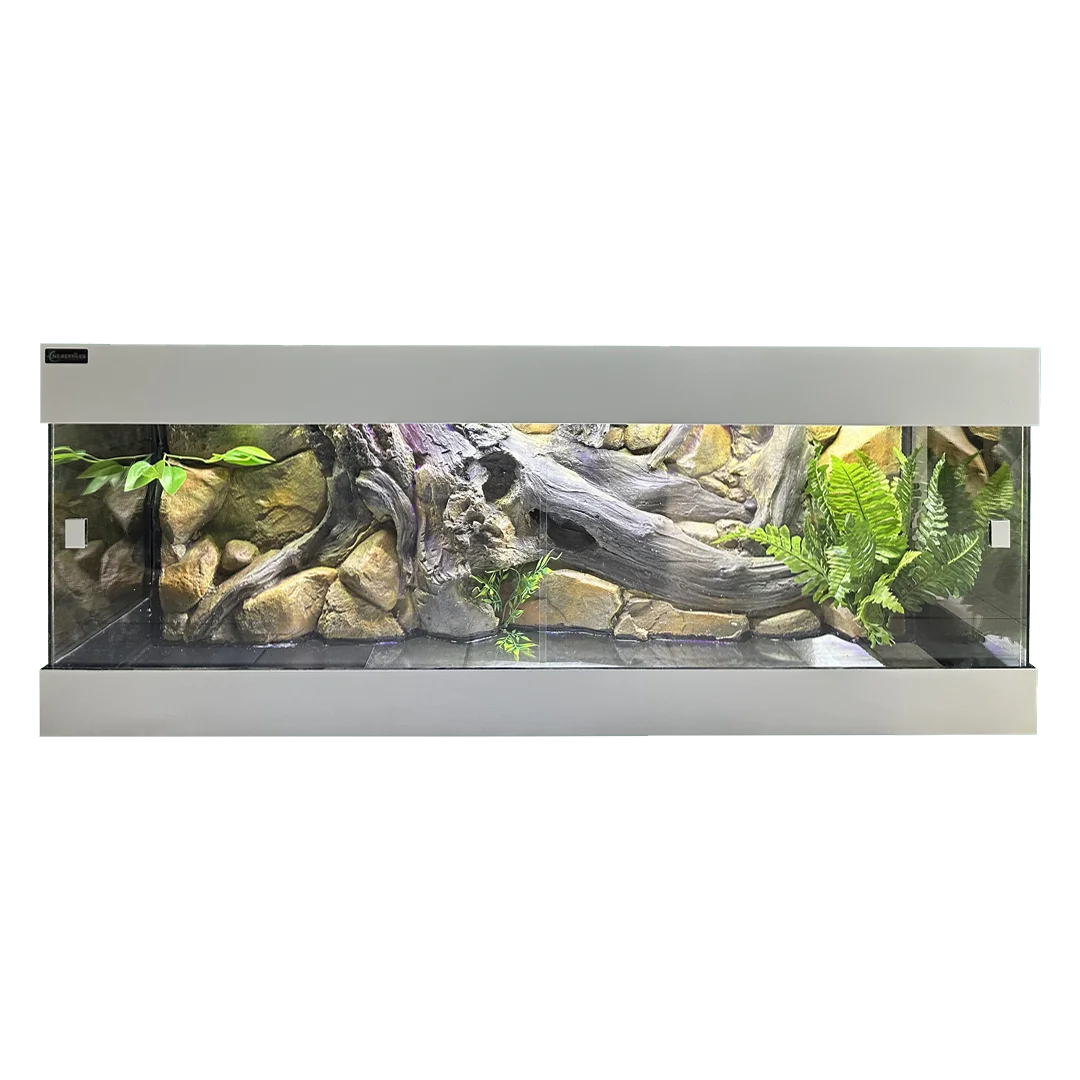
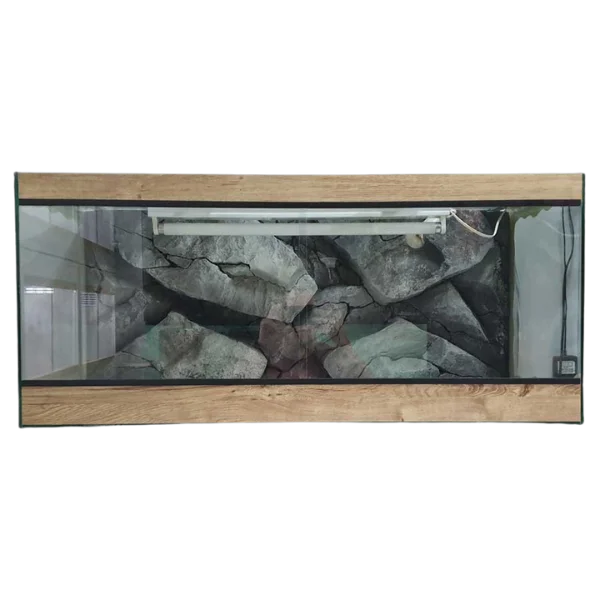
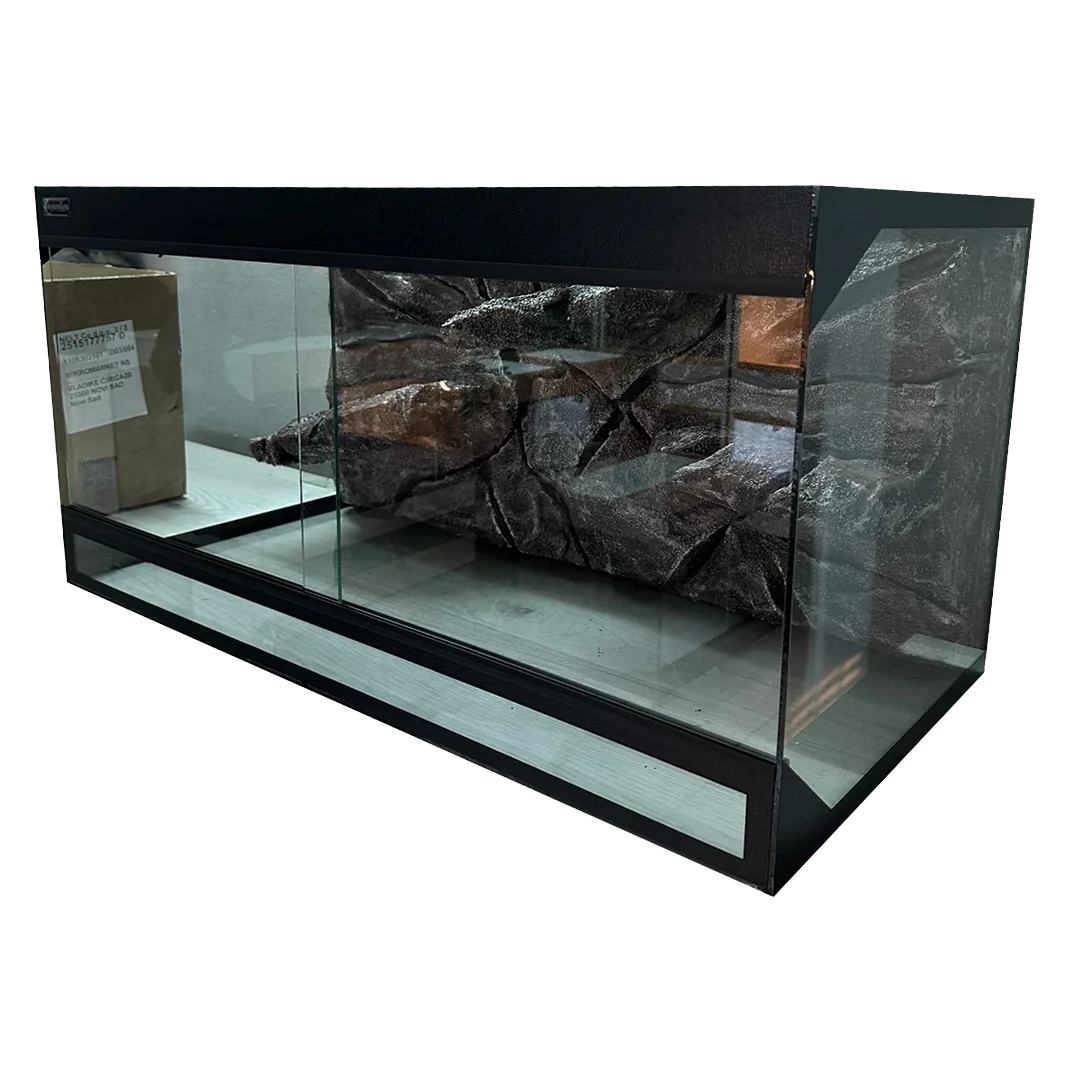
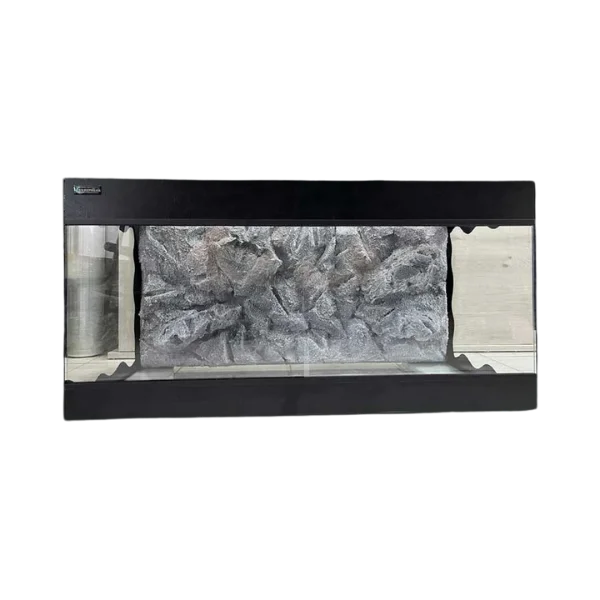
As a very active species, the collared lizard needs a spacious horizontal terrarium - for one adult, a footprint of at least about 90×45 cm, preferably 100-120 cm long. A height of 45-50 cm is enough for rocks and branches. Provide stable, well-secured rock piles or a 3D background for climbing and basking, as well as hides on the warm and cool sides.
Substrate
A low-dust mix of sand and soil that holds its shape works well, with flat rocks as the basking spot. The substrate should be dry. Place rocks directly on the terrarium floor so they cannot shift if the lizard digs underneath. Avoid calcium sand and dusty substrates.
Temperature and conditions
Temperature
This species needs a hot basking spot: 40-45 °C on the rock surface under the heat lamp. The warm side should be around 32-35 °C and the cool side 24-27 °C. At night the temperature can drop to 18-22 °C. Control the heating with a thermostat; the rock temperature is easiest to check with an infrared thermometer.
Lighting
Strong UVB lighting is a must - a desert T5 tube (10-12%) covering most of the terrarium is recommended, along with a heat lamp over the basking spot. Lights run 12-14 hours a day in summer and somewhat less in winter. Without enough UVB and heat, this species quickly develops metabolic bone disease.
Humidity and water
Humidity should be low, around 30-40%, with good ventilation. A shallow dish of fresh water should always be available, and the terrarium can be lightly misted in the morning from time to time. A humid hide helps with shedding.
Diet
Staple diet
The collared lizard is primarily an insectivore and a keen hunter. The staple diet is crickets, dubia roaches and locusts of the right size, with occasional black soldier fly larvae and superworms. In the wild it also hunts smaller lizards, so it is never kept with smaller species.
Feeding frequency
Young animals are fed every day. Adults are fed 3-4 times a week, as many insects as they eat in a few minutes. Remove leftover insects from the terrarium.
Supplements
Insects are gut-loaded and dusted with calcium powder before feeding, and a reptile multivitamin is added once a week. Combined with strong UVB, this is the best protection against metabolic bone disease.
Health and breeding
Lifespan
In captivity the collared lizard usually lives 5-8 years, and longer with good care. A long life depends mostly on enough heat, strong UVB and a varied diet.
Possible health problems
The most common problems are metabolic bone disease, snout injuries in frightened animals that run into the glass, retained shed and stress from a terrarium that is too small or from territorial conflicts. If you notice loss of appetite or lethargy, see a vet who specializes in exotic animals.
Breeding
The collared lizard lays eggs. To breed, it usually needs a winter cool-down period with lower temperatures and shorter days. Females ready to lay eggs develop striking orange or reddish spots on their flanks. A male can be kept with a female only in a large enough terrarium and with careful monitoring.
Frequently asked questions about the collared lizard
It can be, if you are ready to provide a spacious terrarium, a hot basking spot and strong UVB. It is not a species for frequent handling - it is more for watching.
Adults reach about 20-35 cm in total length, more than half of which is tail.
In captivity usually 5-8 years, and longer with good care.
Insects - crickets, dubia roaches, locusts and larvae, dusted with calcium. Adults are fed 3-4 times a week.
Yes, and strong - a desert T5 tube (10-12%) together with a 40-45 °C basking spot. Without it, metabolic bone disease develops quickly.
Never two males, as they are territorial. A male and a female only in a large enough terrarium and with monitoring, and never with smaller lizard species.
Recommended products
Get a collared lizard
Contact us by phone or WhatsApp to check availability, get terrarium and equipment recommendations and care advice. We will be happy to help.