Morelia spilota
Carpet python
A large python from Australia and New Guinea with a pattern that resembles a carpet. It loves to climb, is more active than many pythons and needs a spacious, tall terrarium with branches.
Updated:
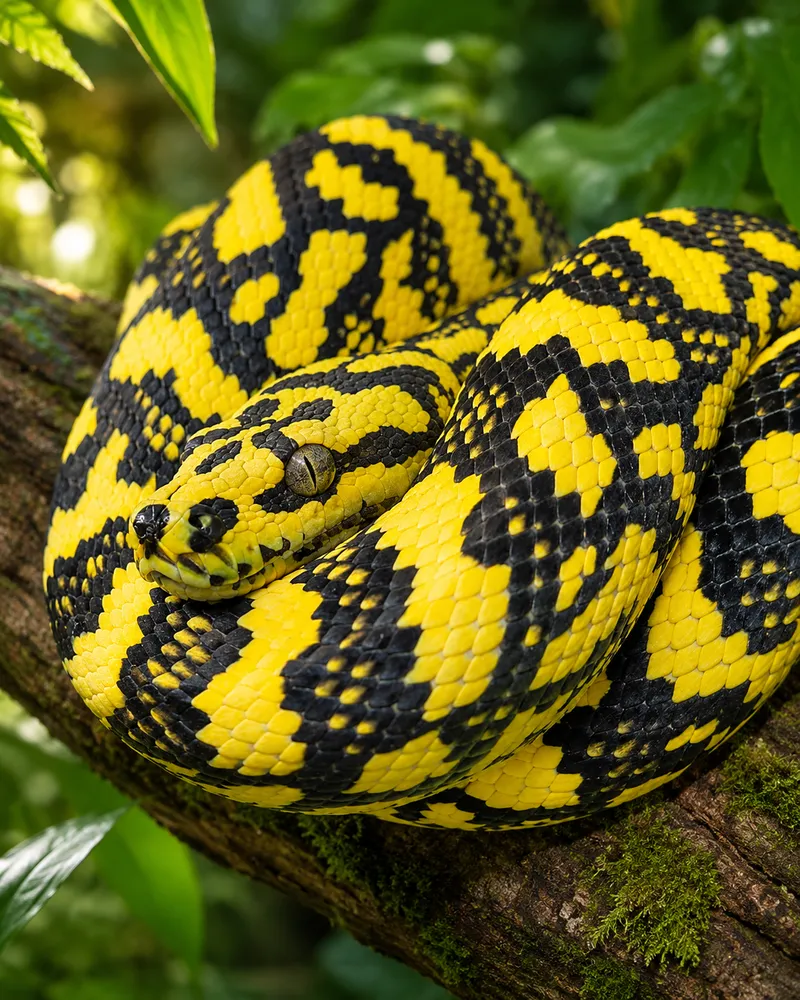
The carpet python is a non-venomous python that kills its prey by constriction. It owes its name to a pattern of light and dark blotches that resembles an oriental rug. Several subspecies are kept in the hobby - most often the coastal (M. s. mcdowelli), jungle (M. s. cheynei), Darwin (M. s. variegata) and inland carpet python (M. s. metcalfei) - and they differ in size, color and temperament. Adults usually reach 2-2.5 m, and with proper care they live 20 years or more.
Origin and habitat
Origin
Much of Australia, and New Guinea with nearby islands.
Habitat
An extremely adaptable python: it lives in rainforests and dry forests, scrubland, rocky areas and along rivers, but also on farmland and in towns - in Australia it often settles in house roofs. It is an excellent climber but also moves on the ground.
Appearance and behavior
Size and appearance
Length depends on the subspecies: jungle carpet pythons are usually smaller, while coastals are among the largest. Most adults are 2-2.5 m long, and females are generally bigger than males. The body is muscular, the head clearly distinct from the neck, and the lips carry heat-sensing pits that let the python detect warm prey. Colors range from olive and brown tones to the bright yellow and black of the jungle form, and many morphs exist in the hobby.
Behavior
They are mostly active at dusk and at night, and during the day they like to rest on branches in a warm spot. Babies can be nervous and nippy, but with patient, regular handling most of them calm down; adults are usually calm. They have a strong feeding response, so food is offered with tongs. Carpet pythons are housed alone, and when handling large individuals it is best to have a second person present.
Terrarium and substrate
Terrarium
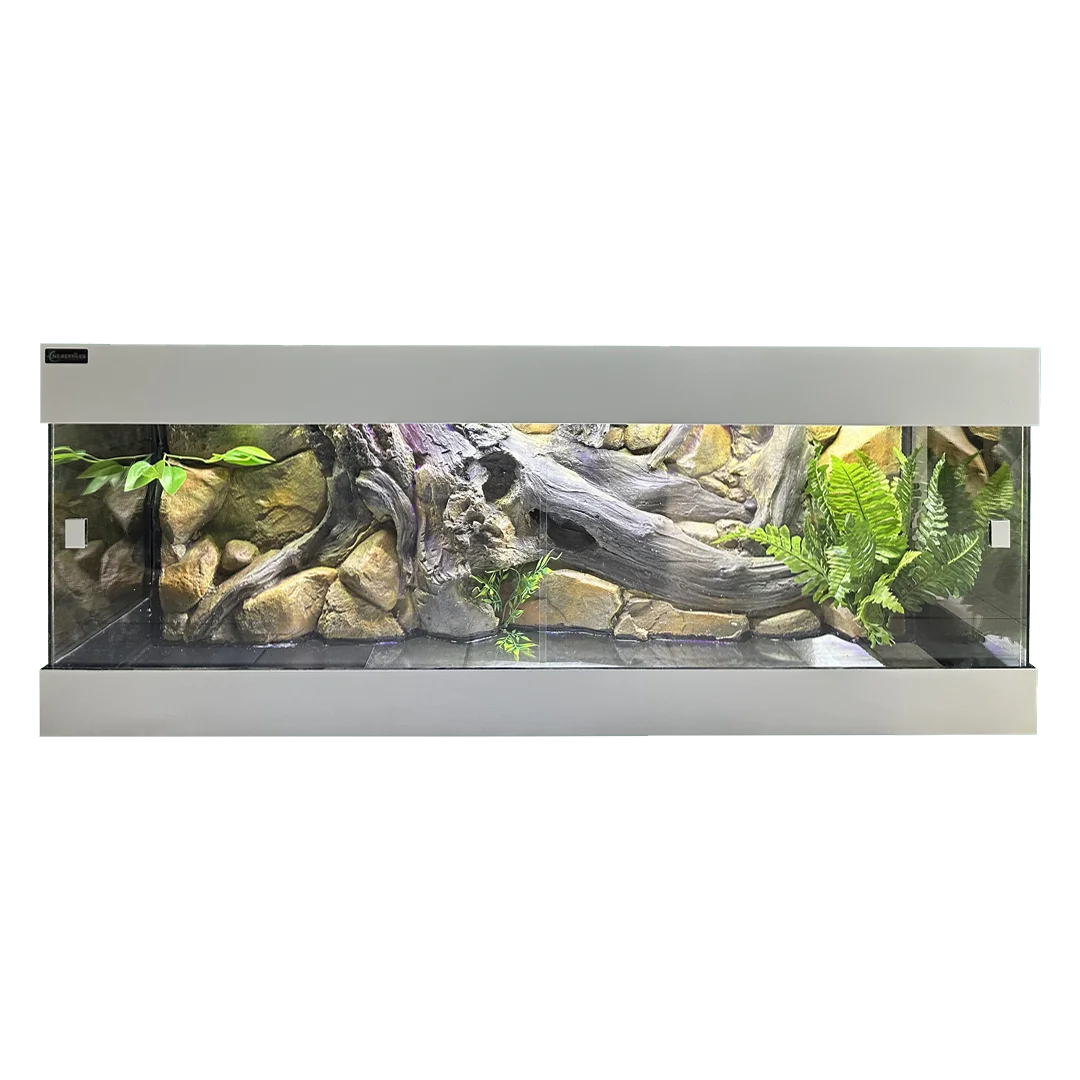
A carpet python uses both the length and the height of its terrarium, so it needs sturdy branches and shelves on several levels, at least as thick as its body. Babies are kept in smaller terrariums, as they feel insecure in too much space, and are moved up as they grow. For an adult, the terrarium should be at least two thirds as long as the snake: for a python of about 1.8 m that means a terrarium about 120 cm long, and for an adult of 2-2.5 m about 150×60×90 cm or larger is recommended - we build such terrariums to measure. Doors or lids must lock, as these pythons are strong.
Substrate
Coco fiber, a soil and coco mix, bark or aspen shavings. The substrate should hold moderate moisture without being wet. Avoid cedar and pine. Provide at least one hide on the warm side and one on the cool side.
Temperature and conditions
Temperature
Basking spot: 31-33 °C. Warm side: 28-30 °C. Cool side: 24-26 °C. At night: 20-24 °C. Because the python climbs, heat is usually provided from above - with a heat lamp or ceramic heater on a thermostat. Always guard the heat source with a protective mesh: pythons like to coil around heaters and are easily burned.
Lighting
UVB is not necessary, but a regular day and night cycle with 10-12 hours of light (on a timer) is recommended. If you use UVB, leave the python plenty of shade.
Humidity
Optimal: 50-60 %, a little higher during shedding. Too much humidity without ventilation leads to skin and respiratory problems.
Water
A large, sturdy bowl of fresh water, cleaned regularly.
Diet and health
Diet
Babies: pinkies or small mice every 7 days. Juveniles: mice and young rats every 7-10 days. Adults: appropriately sized rats every 2-3 weeks. Prey should not be wider than the thickest part of the snake's body. Frozen-thawed food is recommended. Carpet pythons easily become obese, so it is better to feed them too rarely than too often.
Health
Common problems are obesity, burns from unguarded heaters, respiratory infections, stuck shed and mites. The "jaguar" morph is known for neurological problems (loss of balance, unusual head movements), which is worth considering when choosing an animal. Keep new animals in quarantine for a few weeks, away from other snakes. If you notice signs of illness, consult a vet who specializes in exotic animals.
Breeding
Sexual maturity is reached at 2-4 years, usually earlier in males. Breeding is triggered by a winter cooling period of several weeks. The female usually lays 10-30 eggs and coils around them to guard and warm them; in captivity the eggs are usually moved to an incubator, where they hatch after about 50-60 days at 30-32 °C.
Carpet python FAQ
No. The carpet python is not venomous - it kills its prey by constriction. A bite from a large python can be painful, but it is not life-threatening.
Most adults are 2-2.5 m long. Jungle carpet pythons are usually smaller, while coastals are among the largest.
With proper care a carpet python lives 20 years or more, so getting one is a long-term commitment.
Babies start in a smaller terrarium. For an adult, the terrarium should be at least two thirds as long as the snake, with enough height for branches - for a 2-2.5 m python about 150×60×90 cm or larger, which we build to measure.
Its requirements are not complicated, but because of its size, the large terrarium it needs and sometimes nervous babies, it is a better choice for someone who already has experience with snakes.
Recommended products
Contact NS Reptiles
For questions about getting a carpet python, its care or terrarium - we are here. Give us a call or send a message.