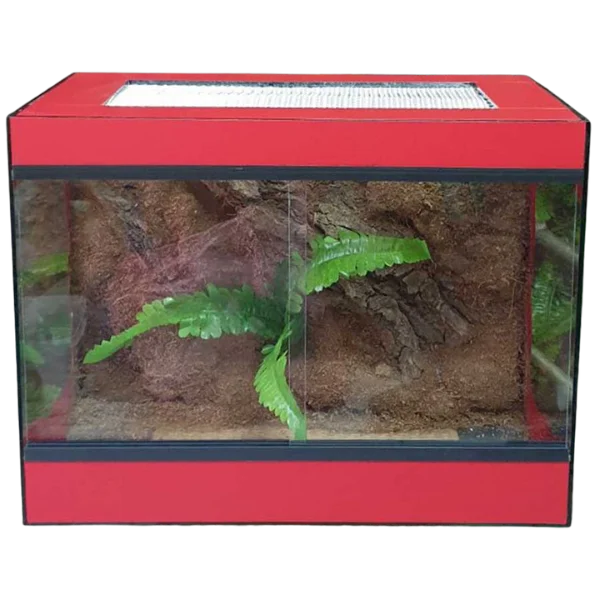
Acanthoscurria geniculata
Brazilian whiteknee tarantula
One of the larger tarantulas, black with striking white stripes on its legs. Active, bold and voracious - almost always on display.
Updated:
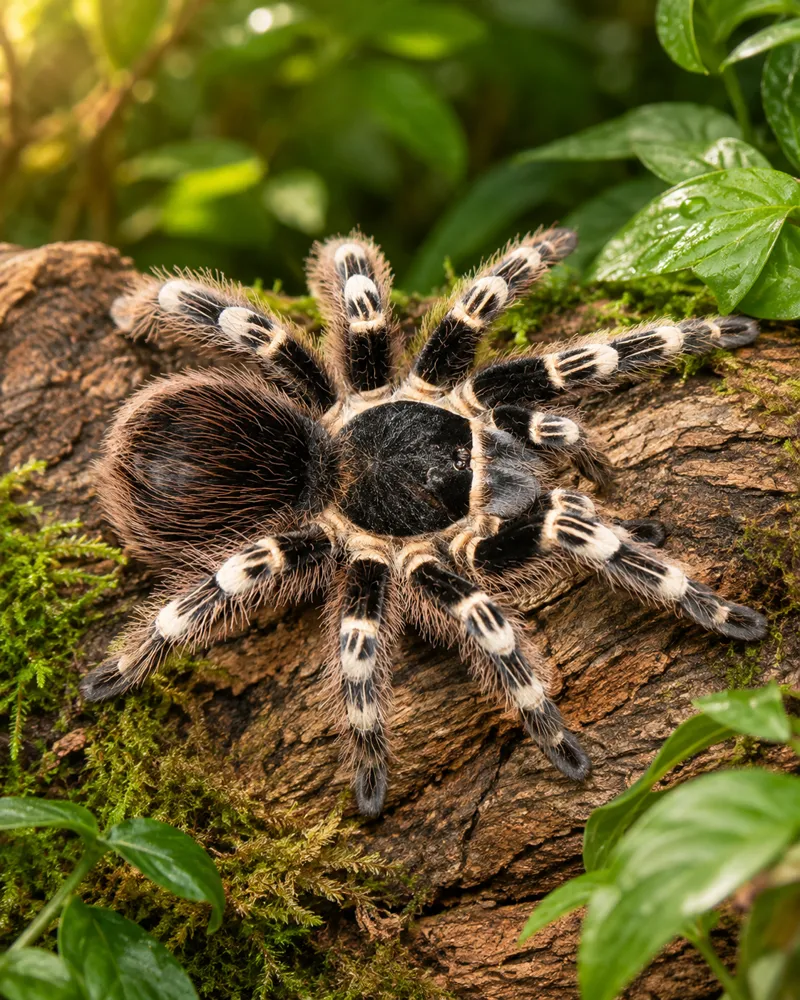
The Brazilian whiteknee tarantula (Acanthoscurria geniculata) comes from the Amazon rainforest of northern Brazil. Its black body and bright white leg stripes make it one of the most striking tarantulas. It grows fast, is hardy and rarely hides, but it is large, fast and flicks hairs readily - great for watching, not for handling. To get started, we also offer a tarantula starter kit with an enclosure and substrate.
Origin, appearance and behaviour
Origin and habitat
It comes from northern Brazil, from the Amazon rainforest, where it lives on the ground in moist burrows under roots and fallen trees.
Size and appearance
One of the larger tarantulas: adults reach a leg span of about 18-20 cm. The body and legs are black, with striking white stripes on the legs, especially around the "knees", which give it its name.
Behaviour
Active and bold - it is often out in the open and attacks prey immediately. When disturbed it readily flicks hairs from its abdomen and may take a defensive posture. It is not for handling, but it is one of the most visible tarantulas.
Terrarium and substrate
Terrarium
This is a terrestrial species, so it needs a horizontal terrarium - floor space matters more than height. An adult needs an enclosure with a floor of about 40×30 cm or larger. Leave only a few centimetres more than the spider's leg span above the substrate: a fall can rupture the abdomen and be fatal. The lid must close tightly, and ventilation should be both on the sides and on top. Spiderlings are kept in smaller containers, in proportion to their size.
Substrate
Provide 10-15 cm of substrate: coco peat or a mix of peat and fertiliser-free soil. The lower layer should stay moist, as it comes from a rainforest, but the surface must not be muddy.
Hide and decor
A half cork bark or a piece of bark as a hide, a shallow water dish and a few dry leaves or artificial plants are enough. Place heavier items on the bottom before adding substrate, so they cannot fall on the spider while it digs. Do not overcrowd the enclosure.
Temperature and humidity
Temperature and light
Room temperature of about 22-27 °C suits it. If it gets colder in winter, put a heat mat on a side or back wall, never under the substrate - the spider escapes heat by digging down, so heating from below could overheat it. No special lighting or UVB is needed; avoid direct sunlight.
Humidity and water
Humidity of about 70-80% suits it. Moisten the substrate regularly by watering one corner, and keep an eye on ventilation to prevent mould. A shallow dish of clean water should always be in the enclosure.
Feeding
Prey
It feeds on live insects: crickets, roaches (e.g. dubia), locusts and similar prey. Prey should not be larger than the spider's abdomen. Do not feed wild-caught insects, as they may carry parasites and pesticides.
Feeding frequency
Adults need food once a week or less, spiderlings twice a week with smaller prey. Remove prey that is not eaten within a day. It is normal for a tarantula to refuse food for weeks before a moult - do not offer food then.
Hairs, venom and handling
Urticating hairs
Like other tarantulas from the Americas, it has urticating hairs on the abdomen that it flicks off with its legs when threatened. On the skin they cause itching and redness, and in the eyes serious irritation. Keep your face away when working in the enclosure and wash your hands afterwards. This species flicks hairs very readily, so extra care is needed when cleaning the enclosure.
Venom
The venom of this species is not dangerous to a healthy person - a bite is comparable to a bee or wasp sting: pain, redness and swelling that pass. As with a bee sting, an allergic reaction is possible; if breathing becomes difficult or swelling spreads, seek medical help immediately.
Handling
We do not recommend handling. A fall from just a few dozen centimetres can be fatal for a tarantula, and a frightened spider may bite or flick hairs. To move it, guide the spider into a clear container and cover it with a piece of card. Keep the enclosure out of reach of children and pets.
Growth and moulting
Growth and lifespan
It grows very fast for a tarantula. Females live about 15-20 years, males much less - usually a year or two after maturing.
Moulting
A tarantula grows by moulting. Before a moult it stops eating and its abdomen darkens. It usually moults lying on its back - this is normal and not a sign of death, so do not touch it. After the moult wait at least a week before feeding, until the new exoskeleton and fangs harden. No live prey may be left in the enclosure at that time.
Possible problems
The biggest risks are falls, dehydration and live prey left in during a moult. A spider pulling its legs under its body is a serious sign - check that it has water and contact an experienced breeder or an exotic animal vet. Mould and mites appear in an overly wet, poorly ventilated enclosure with food leftovers.
Frequently asked questions about the brazilian whiteknee tarantula
It is not dangerous to a healthy person - a bite is similar to a bee sting. The bigger nuisance is the urticating hairs from the abdomen, which irritate the skin and eyes.
Adults reach a leg span of about 18-20 cm.
Females about 15-20 years, males much less.
Live insects of the right size - crickets, roaches and locusts. Adults only need feeding once a week or less.
It can be, with care - it is easy to keep and hardy, but it is large, fast and flicks hairs readily. A good choice for someone who wants an active tarantula that is always on display.
We do not recommend it. A fall can be fatal for the spider, and a frightened tarantula may bite or flick irritating hairs. Use a container to move it.
Recommended products
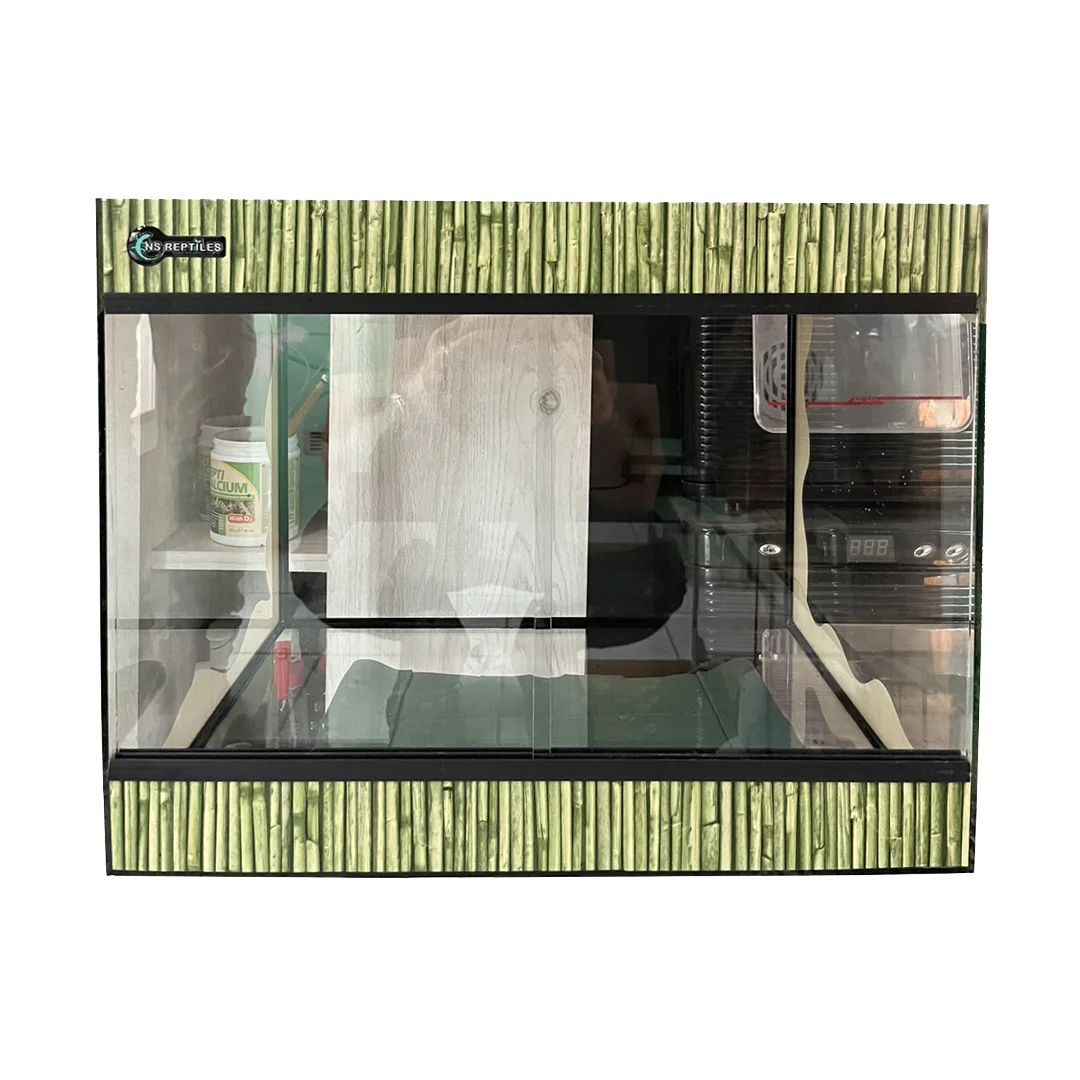
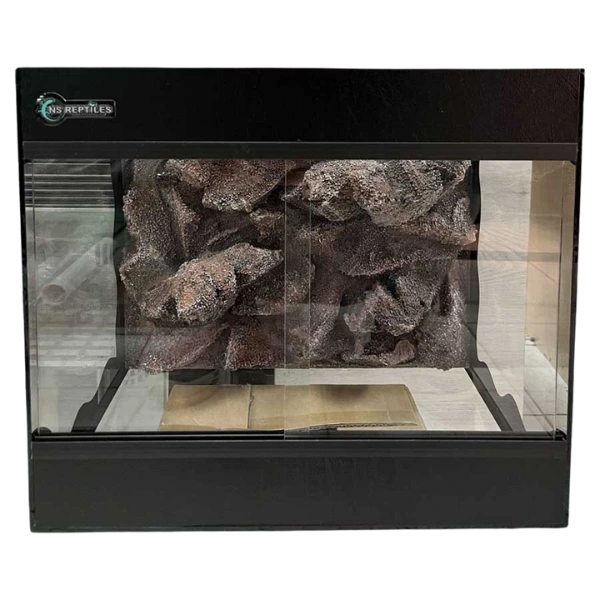
Get a brazilian whiteknee tarantula
Contact us by phone or WhatsApp to check availability, get a terrarium and equipment for your tarantula and care advice. We will be happy to help.