Tiliqua scincoides
Blue-tongued skink
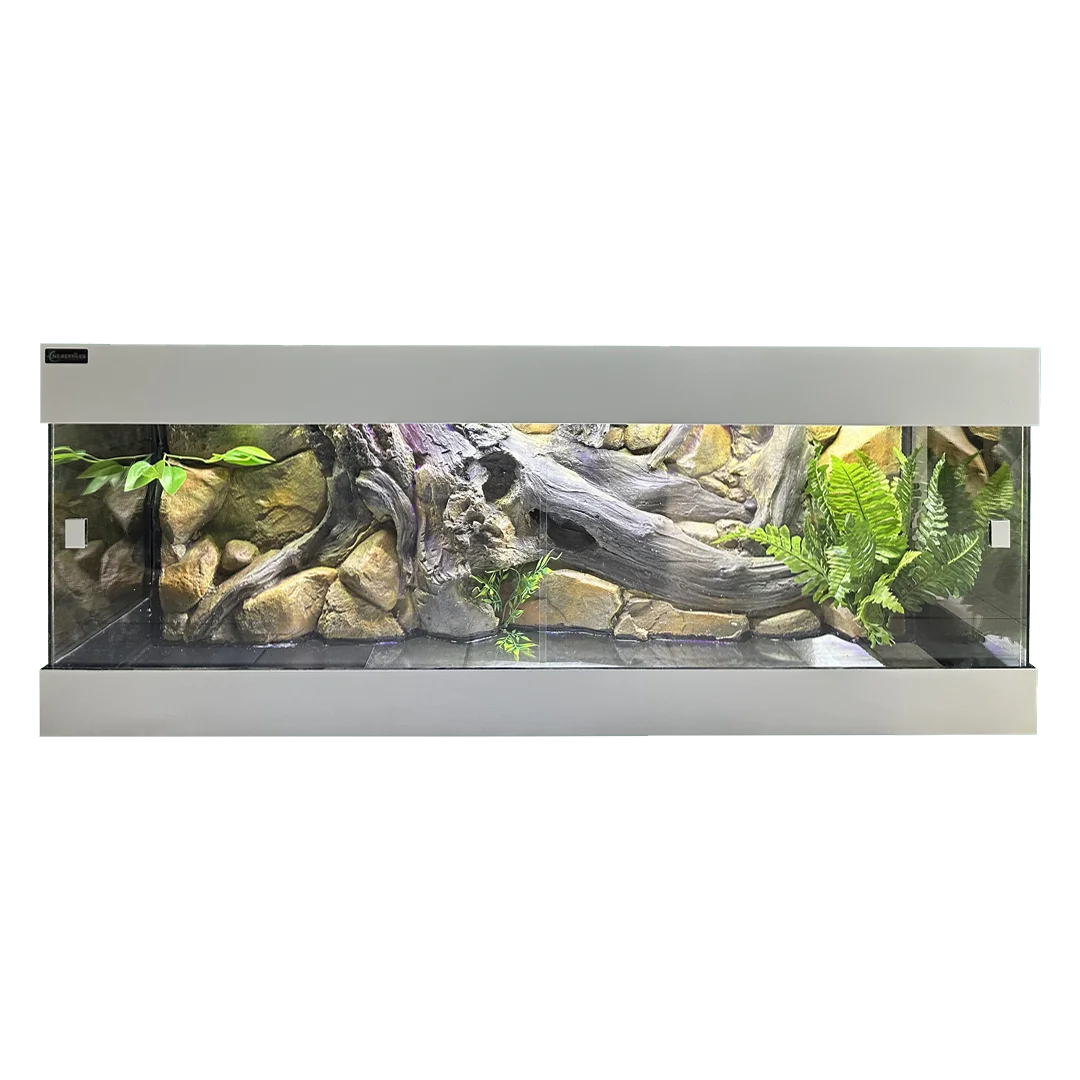
A large, calm lizard from Australia, known for the bright blue tongue it flashes to scare off predators. It gets used to handling easily, which makes it one of the favorite lizards for beginners.
For beginnersUpdated:
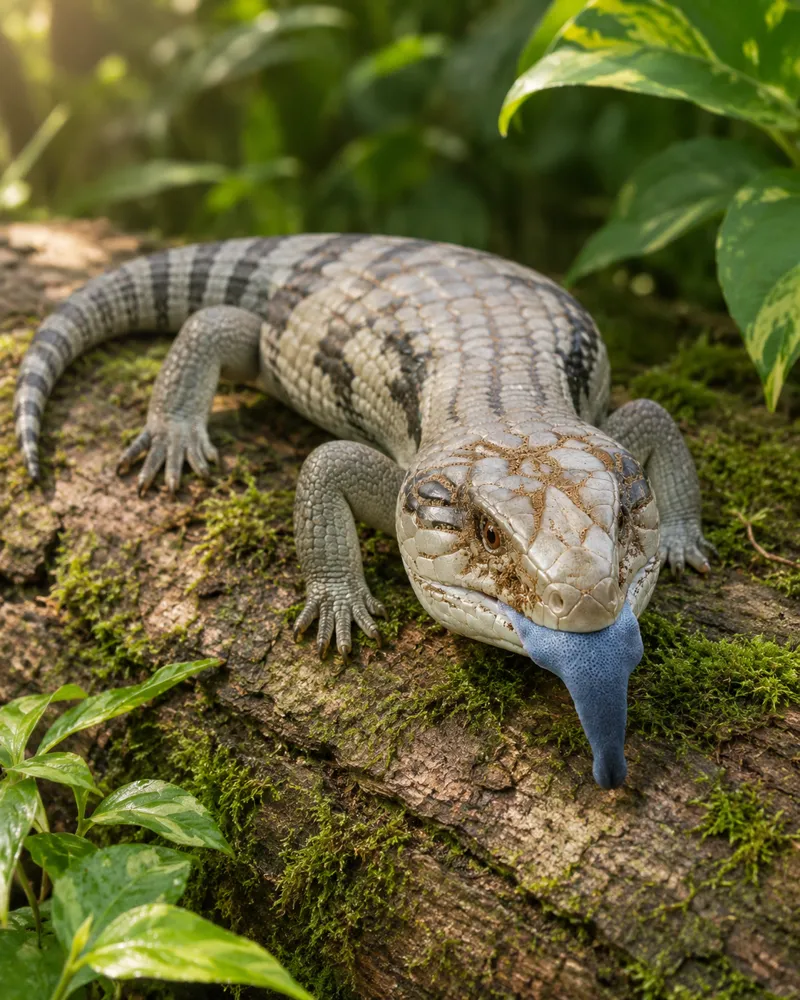
The blue-tongued skink (Tiliqua scincoides) is a large, stocky, short-legged lizard from Australia. It is calm, curious and easy to handle, making it an excellent choice for beginners who want a bigger lizard. It is an omnivore, active during the day, and with proper care it lives a long time - so plan for the next 15 to 20 years before you get one.
Origin, appearance and behavior
Origin and habitat
The species comes from Australia, and one subspecies also lives on Indonesian islands. In the wild it inhabits a wide range of habitats - from open woodland and grassland to semi-humid areas and the edges of towns. It is active during the day and spends the night and the coldest part of the year in burrows, under rocks and leaf litter.
Size and appearance
Adults usually reach 45-60 cm in total length, with a heavy body, a broad head and short legs. The back is typically grey-brown with darker cross bands. Its best-known feature is the blue tongue - when it feels threatened, the skink opens its mouth wide, sticks out its tongue and hisses loudly.
Behavior and handling
It is calm and rarely aggressive towards people; with patience and regular, short handling sessions it becomes very tame. It is neither fast nor a skilled climber - it prefers exploring the ground and burrowing. It is a solitary species and should be kept alone, as two adults in the same terrarium often get into serious fights.
Terrarium and substrate
Terrarium
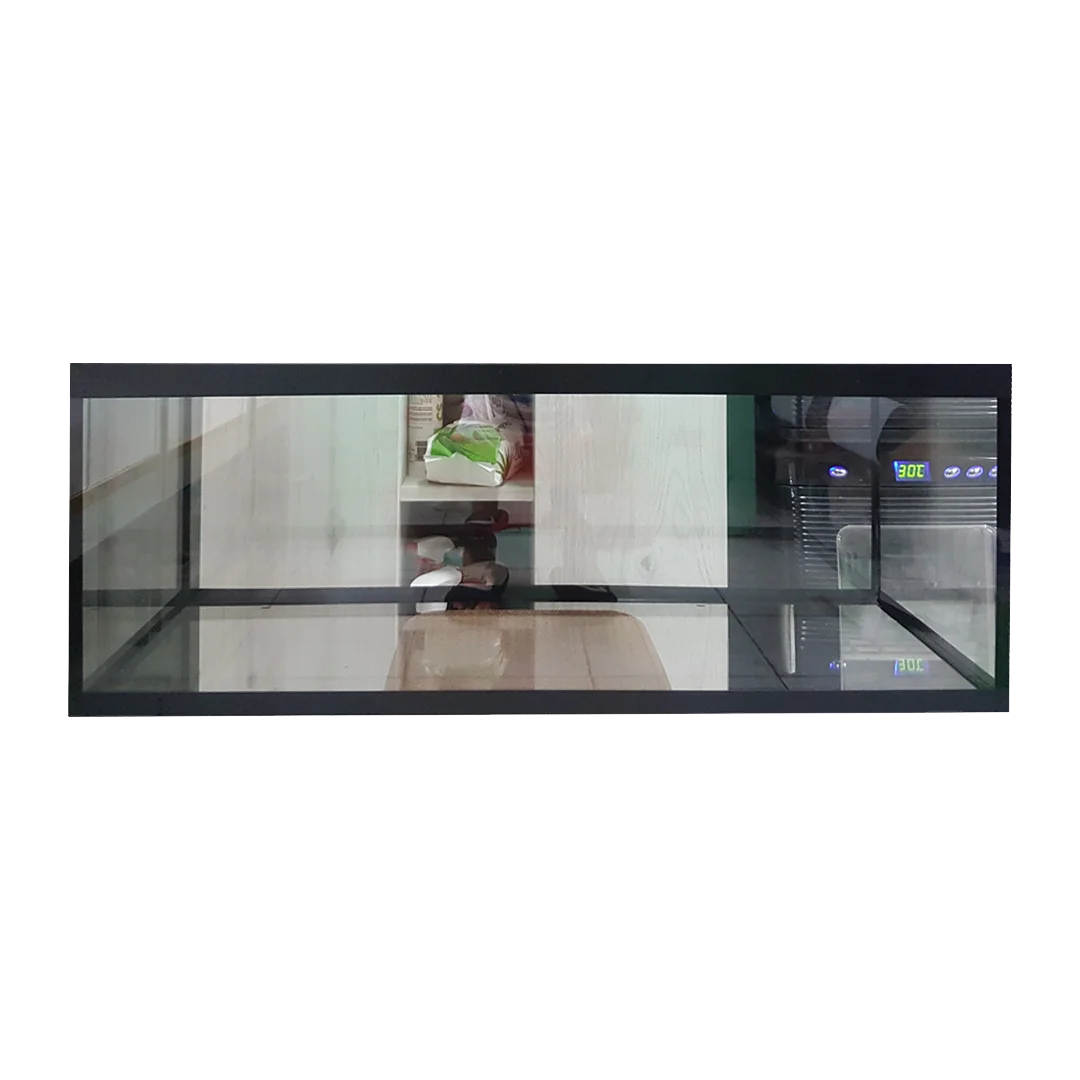
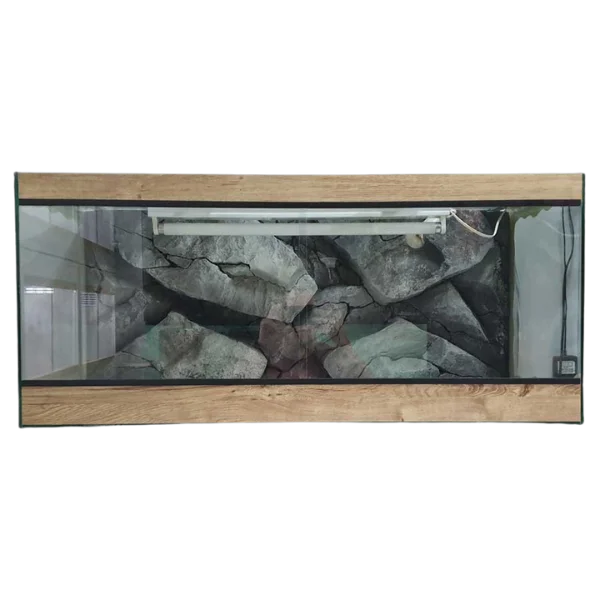
It needs a horizontal terrarium with as much floor space as possible. For an adult, a length of 120 cm or more is recommended, and a footprint of about 100×50 cm is considered the bare minimum. Height is not critical - 45-50 cm is enough. Provide at least two hides (on the warm and the cool side), stable rocks or bark for the basking spot and a heavy water bowl it cannot tip over.
Substrate
Use substrates it can burrow in: a soil and sand mix, coco fiber or bark mulch, at least 8-10 cm deep. The substrate should be dry on the surface; for the more humid subspecies it can be slightly moist in the deeper layer. Avoid fine, sharp and dusty substrates, as well as pure sand.
Temperature and conditions
Temperature
A temperature gradient is essential: a basking spot of 35-40 °C (the rock surface can be slightly warmer), a warm side around 30 °C and a cool side of 24-27 °C. At night the temperature can drop to 20-24 °C, so extra heating is usually not needed. Control the heating with a thermostat and check temperatures with a digital thermometer or an infrared thermometer.
Lighting
As a diurnal species, the skink needs a heat lamp over the basking spot and medium-strength UVB lighting (e.g. a 5-6% T5 tube) covering most of the terrarium. UVB allows it to produce vitamin D3 and use calcium properly. Lights should run 12-14 hours a day, and the UVB tube is replaced as recommended by the manufacturer, usually every 12 months.
Humidity and water
Australian forms do well at 40-60% humidity, while the Indonesian subspecies needs more, around 60-80%. A humid hide with moss helps with shedding. Fresh water in a stable bowl should always be available - skinks drink readily and sometimes soak.
Diet
Staple diet
The blue-tongued skink is an omnivore. As a rough guide, about half of each meal is vegetables and leafy greens (radicchio, endive, dandelion, zucchini, squash, carrot), about 40% animal protein, while fruit is given only occasionally and in small amounts.
Protein
Protein sources include insects (dubia roaches, crickets, locusts, black soldier fly larvae), snails and occasionally boiled egg or lean meat. Fatty larvae such as superworms and waxworms are only treats, as this species gains weight easily.
Feeding frequency
Young skinks are fed every day or every other day. Adults are fed 2-3 times a week. Obesity is one of the most common problems in captivity, so adjust the amount of food to the animal's body condition.
Supplements
Food is regularly dusted with calcium powder, and a reptile multivitamin is added once a week. Together with good UVB lighting, proper supplementation prevents metabolic bone disease.
Health and breeding
Lifespan
With proper care, the blue-tongued skink lives 15-20 years in captivity, and some individuals even longer. It is a hardy species that adapts well to terrarium life when the basic conditions are met.
Possible health problems
The most common problems are obesity, metabolic bone disease (from a lack of UVB or calcium), respiratory infections in a terrarium that is too cold or too damp, and retained shed on the toes and tail. If you notice loss of appetite, labored breathing or lethargy, see a vet who specializes in exotic animals.
Breeding
The blue-tongued skink is live-bearing - the female does not lay eggs but gives birth to fully formed young, usually from a few to around fifteen, sometimes more. Australian forms usually need a winter cool-down period to breed successfully. Mating can be rough, so the male and female are introduced only under supervision and are not kept together permanently.
Frequently asked questions about the blue-tongued skink
Yes. It is calm, gets used to handling easily and is not a picky eater. It does, however, need a spacious terrarium, a basking spot and UVB lighting.
Adults usually reach 45-60 cm in total length and have a heavy, stocky body.
With proper care it lives 15-20 years in captivity, and some individuals even longer.
It is an omnivore: about half of its diet is vegetables and greens, about 40% insects, snails and other protein, and fruit is offered occasionally in small amounts.
Yes. As a diurnal species it needs medium-strength UVB lighting and a 35-40 °C basking spot to use calcium properly.
It is not recommended. The blue-tongued skink is solitary, and adults kept together often injure each other badly.
Recommended products
Get a blue-tongued skink
Contact us by phone or WhatsApp to check availability, get terrarium and equipment recommendations and care advice. We will be happy to help.