Heterometrus petersii
Asian forest scorpion
A large black scorpion from the tropical forests of Southeast Asia, with powerful claws and mild venom. Rewarding to watch, but not an animal for handling.
Updated:
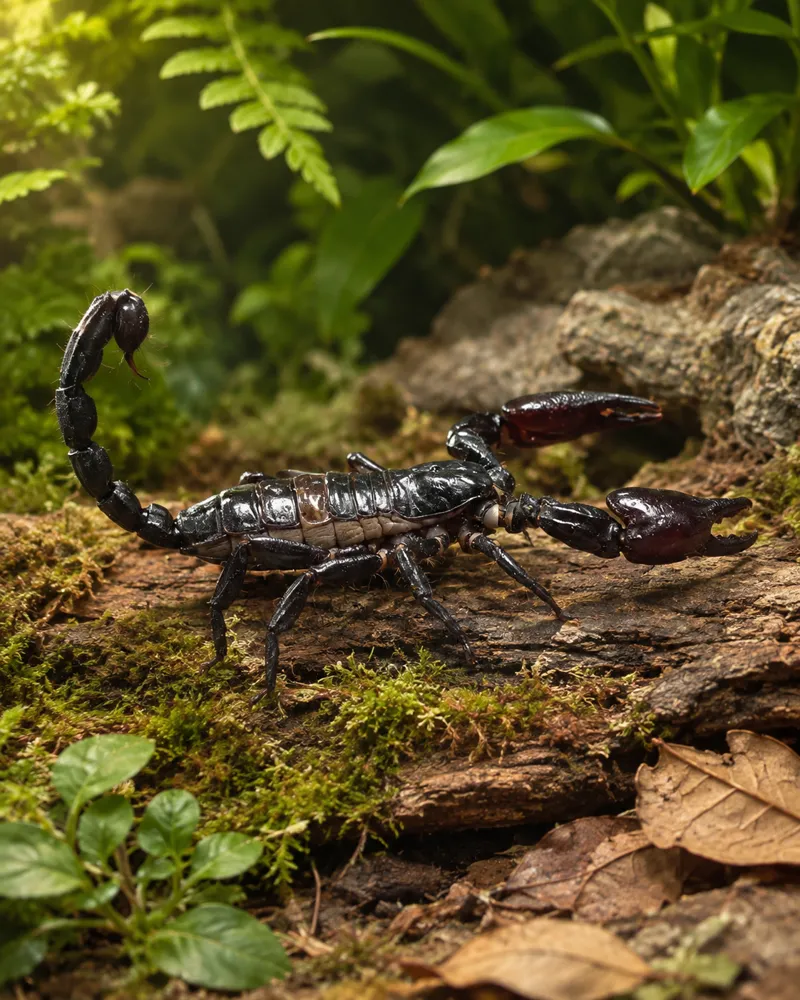
The Asian forest scorpion (Heterometrus petersii) is a large, dark scorpion from the humid tropical forests of Southeast Asia. It has massive claws, and its venom is mild. Its care is not complicated: a roomy horizontal terrarium, deep moist substrate to dig a burrow in and occasional feeding with insects. It is defensive, so it is an animal to observe rather than handle.
Origin, appearance and behavior
Origin and habitat
It comes from Southeast Asia, where it lives on the floor of humid tropical forests. During the day it hides in burrows it digs itself, under rocks, roots and fallen logs, and it comes out to hunt at night.
Size and appearance
Adults reach about 10 cm in length. The body is black to dark brown, and the most striking feature is the broad, powerful claws. At first glance it resembles the African emperor scorpion, but it is an Asian species. Species of the genus Heterometrus are very similar to one another and are often mixed up in the trade, but their care is practically the same.
Behavior
A nocturnal animal - it stays in its burrow during the day and is active after dark. When disturbed, it raises its claws and tail and is quick to defend itself. Although scorpions of this genus are sometimes kept in groups, there is always a risk that one will eat another, especially during a moult. Keeping them individually is the safest option.
Terrarium and substrate
Terrarium
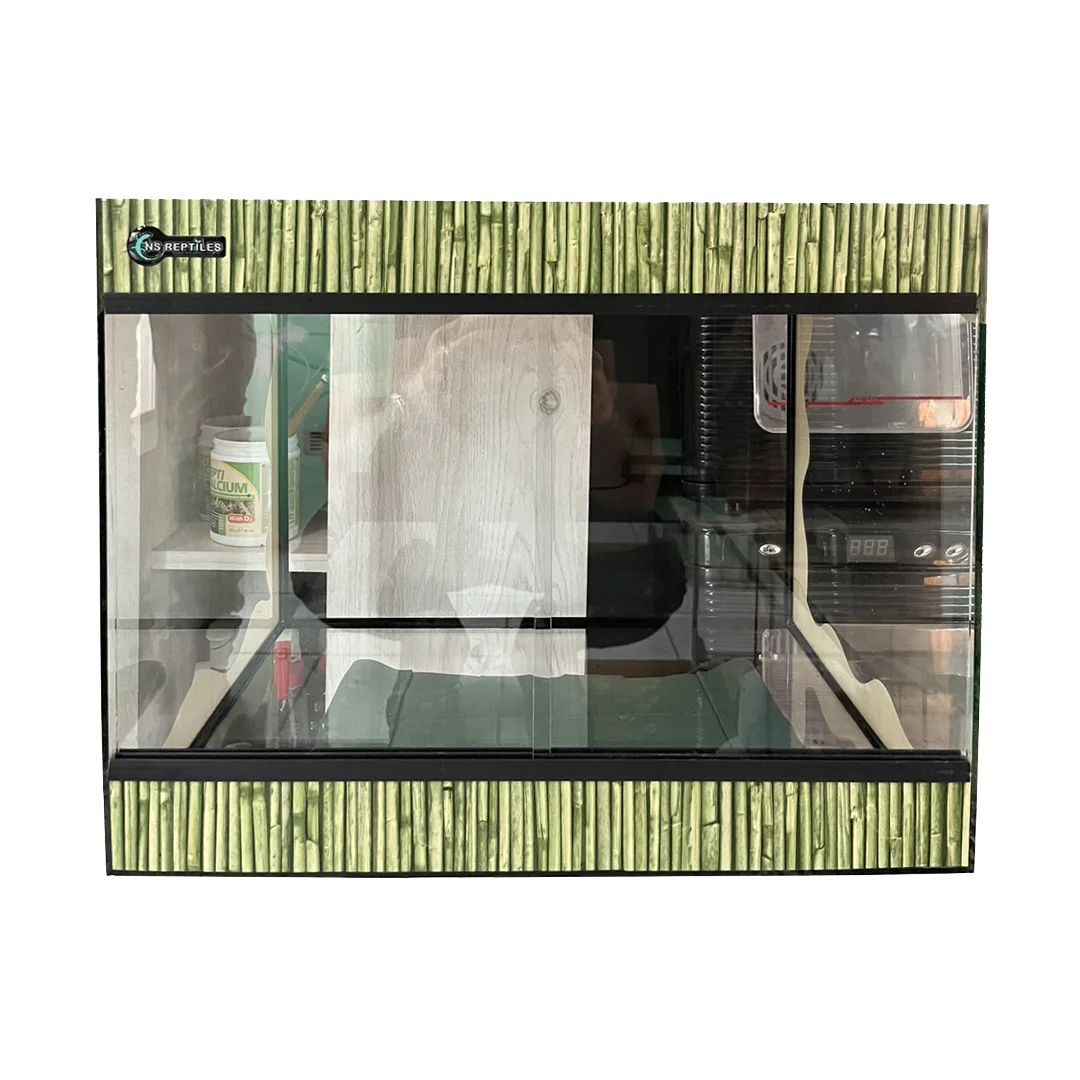
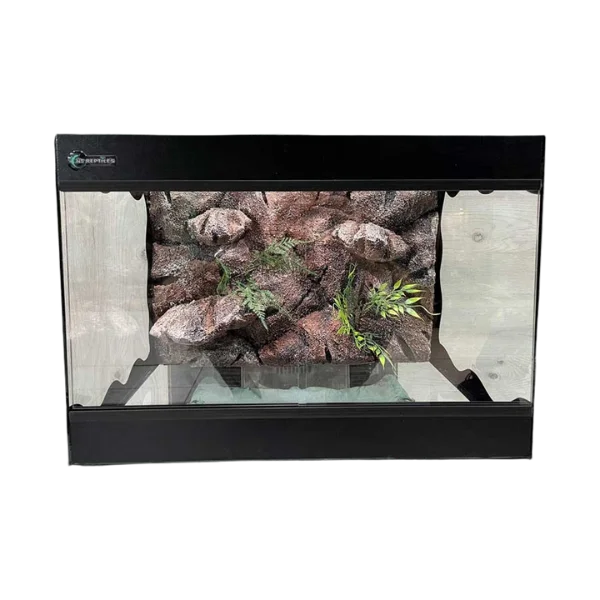
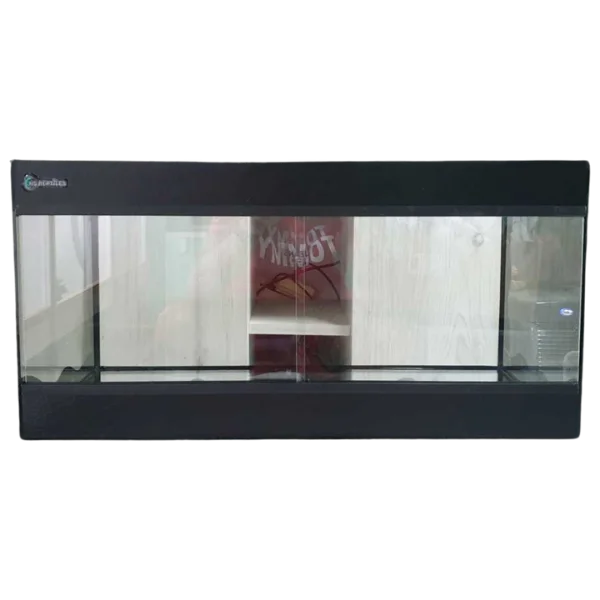
A horizontal terrarium is needed, since this scorpion lives on and in the ground and does not climb. For one adult, a terrarium of about 40-50 cm in length is enough. The lid must fit tightly and be secured, and ventilation should be enough to prevent mould, but not so strong that the substrate dries out quickly.
Substrate
In the wild it digs burrows, so deep substrate is essential - at least 10-15 cm. A good choice is a mix of coco fiber and fertilizer-free soil, optionally with a little sand or clay so burrows hold their shape. Keep the lower layers moist at all times; the surface can be slightly drier.
Hides and decor
Place a piece of cork bark or a half-log on the substrate for the scorpion to start its burrow under. Put heavier decor (rocks, roots) directly on the terrarium floor before adding substrate, so it cannot collapse on the animal while it digs. A few hides and some dry leaves are enough - there is no need to clutter the terrarium.
Temperature and humidity
Temperature
During the day about 24-28 °C is ideal, and at night the temperature can drop by a few degrees. If the room is cooler, attach a heat mat to part of a side or back wall of the terrarium, not under the substrate - the scorpion escapes heat by digging down, so heating from below could overheat it.
Humidity and water
Air humidity should be around 70-80%. Keep the substrate moist by watering one corner from time to time rather than spraying the animal itself. Provide a shallow dish of clean water and change it every few days.
Lighting and UV light
It is nocturnal and needs no special lighting or UVB - daylight from the room is enough, out of direct sun. Like other scorpions, it glows blue-green under a UV lamp (blacklight). This is fascinating to watch, but switch the UV lamp on only briefly, not as permanent lighting. Right after a moult the glow is faint until the new exoskeleton hardens.
Diet
Prey
It eats only live insects: crickets, roaches (e.g. dubia), locusts and similar prey of a suitable size. The prey should not be larger than the scorpion's body. Do not feed wild-caught insects, as they can carry parasites or pesticides.
Feeding frequency
One or two insects a week are enough for an adult, while young scorpions are fed more often and with smaller prey. Remove any insects not eaten within a day - live crickets can stress or even injure the animal, especially during a moult. It is normal for a scorpion to refuse food at times, especially before a moult.
Venom and handling
Venom
The venom is mild: for most people the sting is comparable to a bee sting - local pain, redness and swelling that pass within a few hours. As with bee stings, an allergic reaction is possible. If breathing difficulties, spreading swelling or nausea develop after a sting, seek medical help immediately.
Claws and defense
For defense, the Asian forest scorpion relies more on its powerful claws than on its sting. When it feels threatened, it raises its claws and tail, and a pinch can be painful. It is defensive and not a pet to cuddle - it is an animal to observe.
Handling
Do not pick it up with bare hands. To move it, use long soft-tipped tongs (tweezers with rubber tips) or guide it into a container and cover it. When cleaning the terrarium, always know where the scorpion is. Keep the terrarium out of reach of children and other pets.
Health and moulting
Lifespan
With good care it usually lives 5-8 years, although sources give somewhat different figures. It takes several years to reach full size.
Moulting
Young scorpions moult several times before they reach adulthood. Before a moult they stop eating and retreat into their burrow. Do not disturb them during this time and do not leave live prey in the terrarium. After a moult the new exoskeleton is soft, so wait about a week before feeding, until it hardens. Moulting goes well only with enough moisture.
Possible problems
Most problems are caused by dried-out substrate, mould and leftover food. Failed moults are most often the result of humidity that is too low. Remove dead insects and prey remains regularly. If the scorpion has not eaten for a long time and is not about to moult, or is visibly weak, check the temperature and humidity and see a vet who specializes in exotic animals.
Breeding
Females give birth to live young, which they carry on their backs until the first moult. Breeding requires experience and a separate setup; beginners are better off keeping a single scorpion.
Frequently asked questions about the Asian forest scorpion
For most people it is not - the sting is similar in strength to a bee sting. An allergic reaction is possible, so if breathing difficulties or spreading swelling develop, seek medical help immediately.
We do not recommend it. It is defensive and its claws can give a painful pinch. To move it, use long soft-tipped tongs or a container.
With good care, usually 5-8 years.
Live insects of a suitable size - crickets, roaches and locusts. One or two insects a week are enough for an adult.
A scorpion's exoskeleton contains substances that glow blue-green under UV light. This is true of all scorpions; switch the UV lamp on only briefly, for viewing.
Recommended products
Get an Asian forest scorpion
Contact us by phone or WhatsApp to check availability, get terrarium and equipment recommendations and care advice. We will be happy to help.